





















































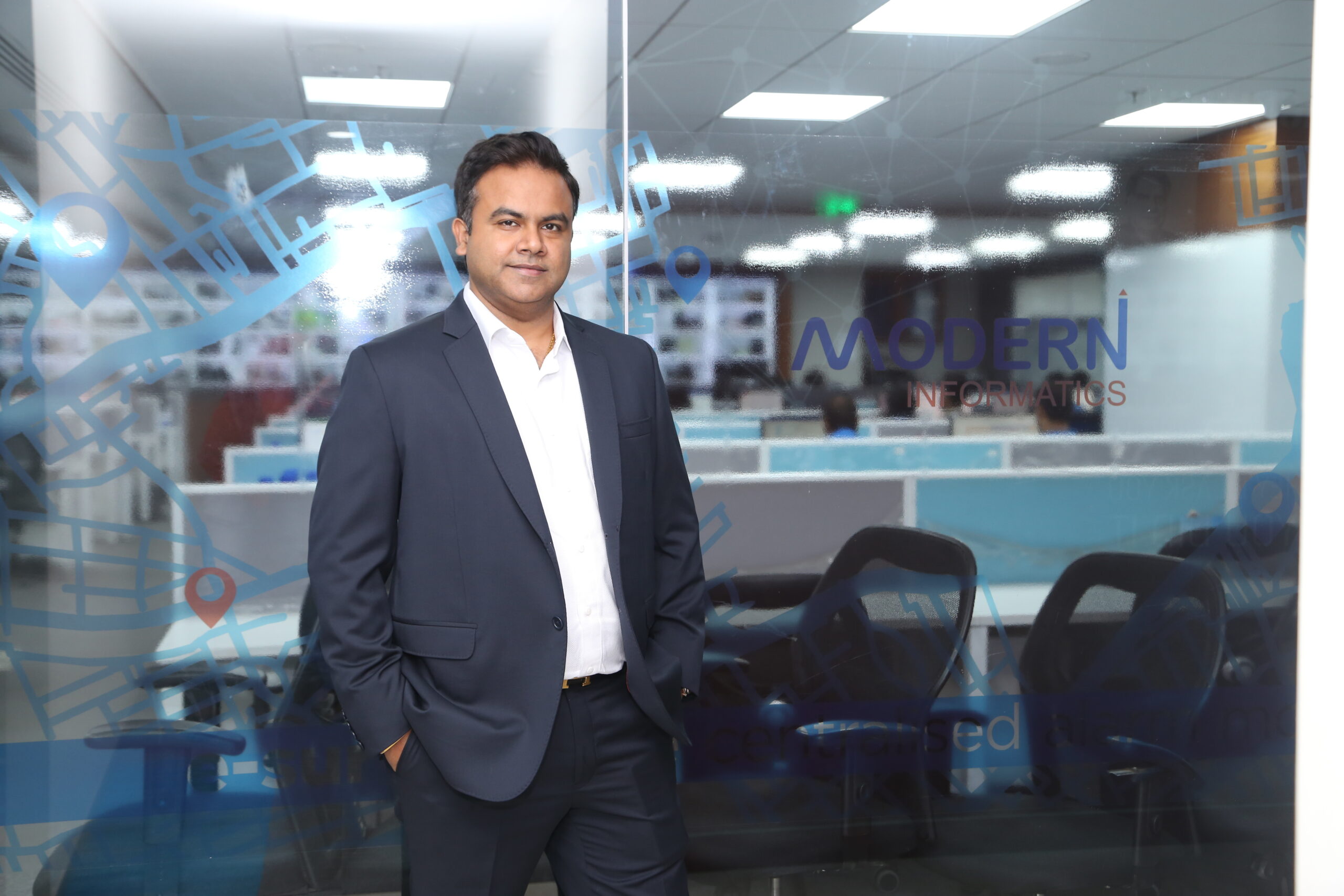

















































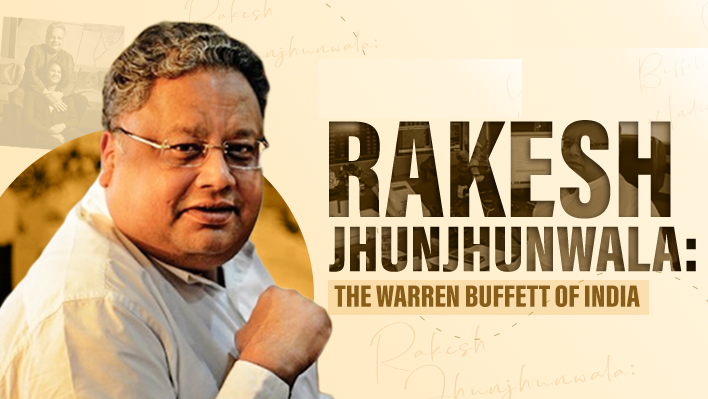


























































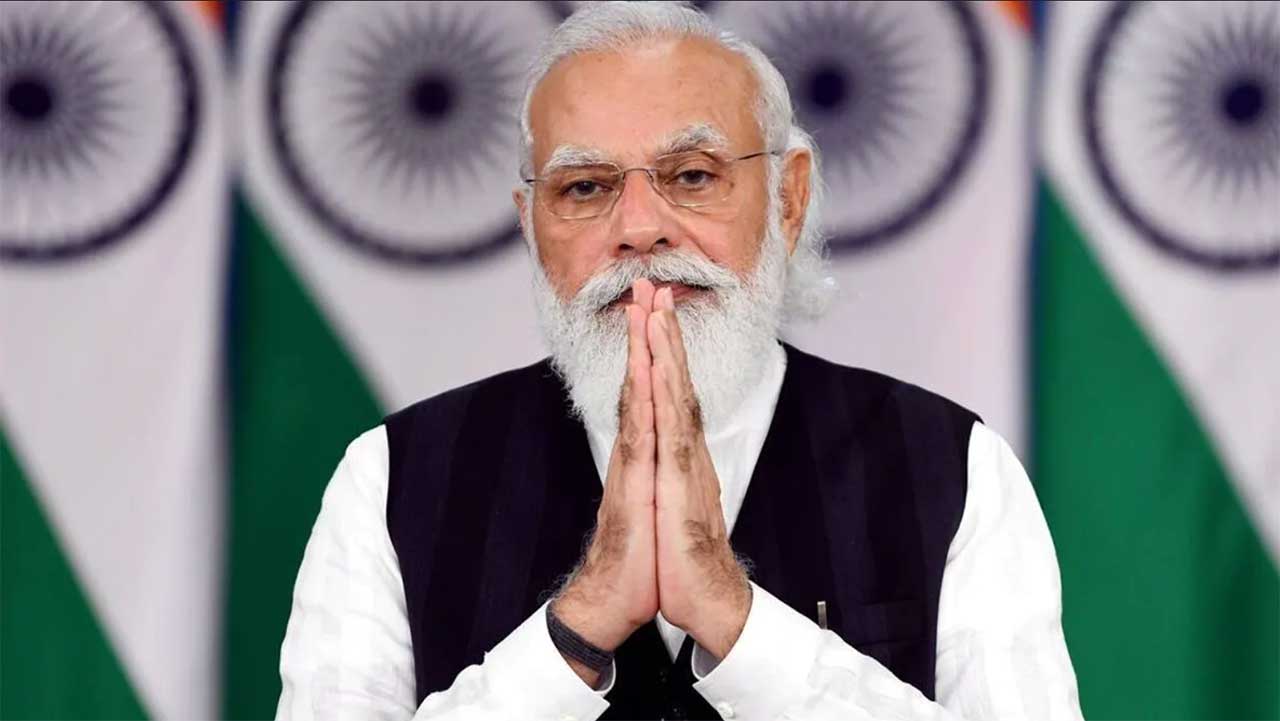





























Rakesh Verma: The Visionary Co-Founder, Chairman and Managing Director of MapmyIndia.
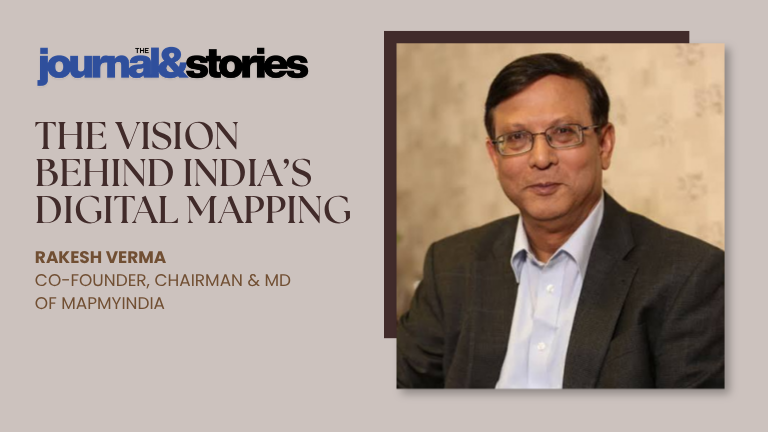

- Rakesh Verma recognized the potential of digital mapping when the concept was still unfamiliar to most people.
Instead of waiting for the market to develop, he focused on building the technology that he believed the future would require. - MapmyIndia’s journey began with the ambitious goal of digitally mapping India when reliable digital maps were not readily available.
The company built its map dataset from the ground up through persistence, investment and detailed data. - Rakesh Verma’s legacy is not simply about building a company that maps India, but about helping India build the technology to understand its own geography digitally.
When people use a digital map to find a destination track a vehicle locate a business or understand a route they often think only about the technology visible on their screen.. Behind every reliable map is years of data collection, technology, research and an enormous amount of human effort.
In India, one entrepreneur who understood the importance of this technology long before digital maps became part of life was Rakesh Kumar Verma, the Co-Founder, Chairman and Managing Director of MapmyIndia. His story is not simply about building a technology company. It is about recognizing an opportunity before the market was ready for it and having the patience to build something that could take decades to mature.
From Engineering to Entrepreneurship
Rakesh Verma’s journey began with a strong technical and academic foundation. He earned a Bachelor’s degree in Mechanical Engineering from BITS Pilani in 1972. Later completed an MBA from Eastern Washington University in the United States in 1979. His early career gave him exposure to business, technology and management in environments including work associated with EDS, a General Motors company.
For professionals a successful career abroad might have been the destination. For Verma however it became part of a bigger journey.
After spending years in the United States he returned to India with the ambition of creating something in the countrys technology ecosystem. He eventually joined hands with his wife, Rashmi Verma. Together they began building what would become MapmyIndia.
The decision was anything but conventional.
Seeing the Future Before Everyone Else
Imagine trying to map a country as geographically and culturally diverse as India at a time when digital mapping was still an emerging concept.
That was the challenge Rakesh Verma chose.
In the 1990s digital maps were near as common as they are today. Smartphones had not become mainstream Google Maps did not. Location technology was not something ordinary consumers interacted with every day.
Yet Verma recognized that location would eventually become a part of digital information. MapmyIndias own account of its history says its founders believed that a large proportion of data would have a location component.
Of waiting for the market to develop first Verma and his team started building the underlying data and technology themselves.
That decision became the foundation of MapmyIndia.
Building MapmyIndia From the Ground Up
MapmyIndias journey began in the mid-1990s with the goal of digitally mapping India. According to the companys profile the founders started this effort when digital maps for India were not readily available and built the map dataset from the ground up.
This was not a startup story.
Mapping India required persistence, investment and detailed data. Roads, addresses, geographical features, businesses and other location information had to be collected organized and continually updated.
The company gradually transformed this technical challenge into a business opportunity.
One of its milestones came in 2004, when MapmyIndia launched its internet mapping portal offering interactive maps, local search and directions. A years later in 2007 it introduced its GPS navigation product helping bring digital navigation technology into Indian vehicles.
These achievements were significant because they happened before digital navigation became a smartphone habit.
More Than a Mapping Company
One of the most interesting aspects of Rakesh Vermas leadership is that he did not view maps as simple visual products.
For him maps were a foundation for something larger: location intelligence.
Over time MapmyIndia expanded beyond navigation into digital mapping, geospatial software, location-based services and IoT technologies. The companys present-day business serves enterprises, automotive companies, government organizations and other customers that rely on location data and technology.
This evolution reflects a change in technology itself.
A digital map today can influence logistics, transportation, automotive systems, infrastructure planning, emergency response, business decisions and many other areas. What once looked like a map has become an important layer of digital infrastructure.
Vermas early conviction helped position MapmyIndia to participate in that transformation.
A Customer-Funded Approach to Growth
Another part of Rakesh Vermas entrepreneurial journey is his approach to building the company.
MapmyIndias current leadership profile describes the business as being built with a focus on customer funding, financial discipline and long-term sustainability. The company says Verma started with seed capital and built the business over decades while raising relatively limited external equity before eventually reaching the public markets.
This approach stands apart from the startup narrative of rapid fundraising and aggressive expansion.
Instead the emphasis was on creating technology earning customer trust and allowing the business to grow over time.
That philosophy was particularly relevant for a company operating in a deep-tech sector, where building data and reliable infrastructure can take years.
The IPO: A Major Milestone
MapmyIndias public-market journey became another chapter in Vermas story.
C.E. Info Systems, the company behind MapmyIndia went public in 2021. The IPO attracted investor interest and became an important milestone in the companys evolution from a privately built technology business into a publicly listed enterprise.
For Verma the IPO represented more than an event. It demonstrated that an Indian company built around mapping and geospatial technology could create substantial value over the long term.
The journey also highlighted the potential of building technology for Indias unique geographic and business environment.
Recognition for a Life of Innovation
Rakesh Vermas contributions have received recognition from both the technology and geospatial communities.
He has been associated with Indias policy and industry ecosystem and has contributed to discussions around mapping and geospatial technologies. His professional profile notes his involvement with industry bodies and government-related geospatial initiatives.
His recognitions have also continued in years.
MapmyIndias leadership profile records the BITS Ratna Award in 2023 following the Distinguished Alumnus Award from BITS Pilani well as the Geospatial Leadership – Lifetime Achievement Award in 2025 at the Geospatial World Forum in Madrid.
These honors reflect the impact of his work—not only as a business leader but also as someone who helped establish digital mapping as an important technology sector in India.
A Vision That Goes Beyond Business
Perhaps the interesting part of Rakesh Vermas story is that his vision has always extended beyond building a profitable company.
His stated ambition has been closely connected with creating technology and contributing to Indias technological self-reliance. MapmyIndias present mission continues to focus on making digital map data and location-based technologies available to businesses, governments and users.
This idea has become increasingly relevant in an era when countries are paying attention to control over critical digital infrastructure and data.
Location data is not merely about finding directions. It can influence infrastructure, transportation networks, commerce, public services and strategic decision-making.
Building these capabilities within India therefore has significance beyond the success of one company.
Giving Back to Education and Innovation
Vermas work also extends into education and entrepreneurship.
According to MapmyIndias leadership profile he has supported initiatives at BITS Pilani, including the Rakesh Verma Convention Centre and the MapmyIndia Innovation Lab. He has also been involved with industry institutions and continues to mentor entrepreneurs and support innovation.
This reflects another dimension of his leadership philosophy: creating an ecosystem where future innovators can learn, experiment and build.
All technology companies do not exist in isolation. Their long-term success depends on people, education, research and an environment that encourages ideas.
The Legacy of Rakesh Verma
Rakesh Vermas journey is ultimately a story about timing, conviction and patience.
He entered the mapping space when the concept was still unfamiliar to most people. Of asking whether the market was already large enough he focused on building the technology that he believed the future would require.
That mindset helped MapmyIndia evolve from a mapping project into a major Indian geospatial technology company.
Today as Group Chairman and Managing Director, Verma continues to be associated with the companys direction. MapmyIndias current leadership structure lists him as Co-Founder, Managing Director and Group Chairman, with Rashmi Verma continuing as a technology leader and Rohan Verma serving as Joint Managing Director.
His story offers a lesson for entrepreneurs: not every successful idea looks obvious at the beginning.
Sometimes the biggest opportunities are hidden inside technologies that people do not yet understand.
Rakesh Verma saw that possibility in maps decades ago. He returned to India built patiently invested in technology and data and helped create a location-tech ecosystem.
From roads and routes, to business intelligence and geospatial technology the journey of MapmyIndia shows how one early conviction can eventually influence an industry.
Perhaps that is the most enduring part of Rakesh Vermas legacy—not simply that he built a company that maps India but that he helped India build the technology to understand its own geography digitally.