


















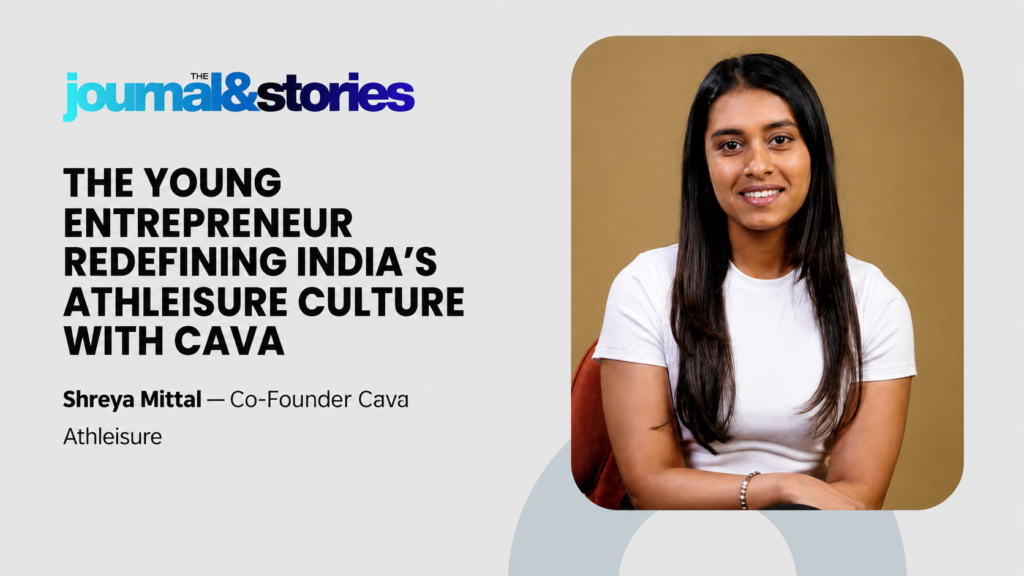







































































































































































































































Shreya Mittal: The Young Entrepreneur Redefining India’s Athleisure Culture with CAVA.
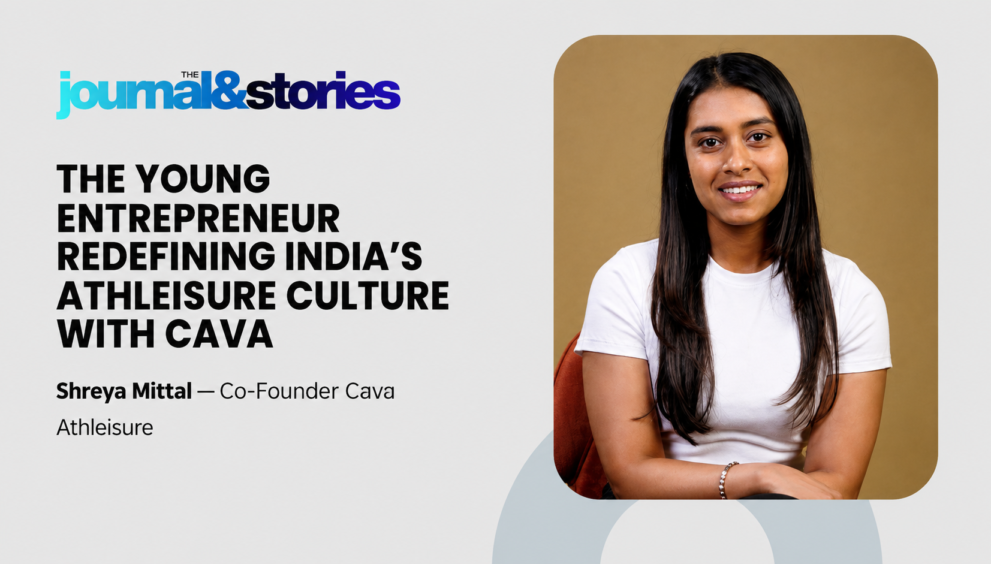

- Shreya Mittal turned a simple need for better athleisure during the pandemic into a growing fashion and lifestyle venture with her sister Ria.
- Through CAVA, Shreya is helping shape a brand where comfort, fashion, movement and community come together for today’s generation.
- From starting CAVA as a teenager to earning Forbes 30 Under 30 Asia recognition, Shreya’s journey reflects ambition backed by execution and persistence.
Entrepreneurship does not always begin with a detailed business plan. Sometimes, it starts with a simple problem that refuses to go unnoticed. For Shreya Mittal, that problem appeared during the COVID-19 lockdown, when working out became an important part of her daily routine and comfort suddenly became just as important as style.
Along with her sister Ria Mittal, Shreya noticed something missing in the Indian market. They wanted athleisure that could look stylish, feel comfortable and work equally well during workouts and everyday life. Yet, finding something that matched their expectations was difficult.
From a Lockdown Workout Idea to a Fast-Growing Fashion Brand
Entrepreneurship does not always begin with a detailed business plan. Sometimes, it starts with a simple problem that refuses to go unnoticed. For Shreya Mittal, that problem appeared during the COVID-19 lockdown, when working out became an important part of her daily routine and comfort suddenly became just as important as style.
Instead of simply accepting the gap, the sisters decided to build the solution themselves.
That idea eventually became CAVA Athleisure, a Bengaluru-based brand founded by the sisters in 2020. What began as a conversation between two young women at home gradually developed into a fashion and lifestyle business focused on comfort, functionality, design and community.
Today, Shreya is recognized as one of the young minds behind CAVA’s growth, bringing together business thinking, brand storytelling and a clear understanding of what younger Indian consumers want from modern clothing.
A Business Idea Born During an Uncertain Time
The year 2020 was challenging for businesses across the world. For Shreya and Ria, however, the lockdown unexpectedly became the starting point of their entrepreneurial journey.
Both sisters were studying abroad but returned home during the pandemic. Their regular workouts became a way of maintaining routine and normalcy. At the same time, they realized that the athleisure available to them in India did not completely match their expectations in terms of style, comfort and versatility.
That observation became the foundation of CAVA.
What makes the story particularly interesting is the age at which the sisters took the entrepreneurial leap. They were only around 18 and 20 years old when they decided to turn their idea into a business. Instead of waiting for the “right” time or gaining years of corporate experience first, they chose to learn by building.
This early start became an important part of Shreya’s entrepreneurial identity.
Shreya Mittal: The Business Mind Behind the Vision
While Ria brought a strong fashion and design perspective to the business, Shreya’s role has been closely associated with the business side, brand building and storytelling.
Her educational background also reflects this direction. Shreya studied at Warwick Business School at the University of Warwick, while Ria studied fashion management at the University of the Arts London. The combination gave the sisters different but complementary perspectives.
That difference became a strength rather than a weakness.
Building a fashion brand requires much more than creating attractive clothes. There are questions around pricing, sourcing, marketing, customer experience, distribution, branding and long-term positioning. Shreya’s contribution has been important in connecting the creative idea with the business reality.
CAVA’s own communication around the sisters describes their relationship in a surprisingly relatable way: they are not only co-founders but also siblings who bring different personalities and strengths to the company.
That balance has helped create a brand that feels both fashion-conscious and commercially focused.
CAVA Is More Than Just Activewear
One of the biggest ideas behind CAVA is that athleisure should not be restricted to the gym.
Modern consumers increasingly want clothing that can move with them throughout the day. A pair of leggings can be worn for a workout, a jacket can become part of a casual outfit, and comfortable activewear can easily become everyday fashion.
CAVA has built its positioning around this idea of adaptive athleisure—clothing designed to move between workouts and everyday life. The brand has also invested in materials and fabric innovation, including its proprietary ADPT™ fabric, along with materials such as Supima cotton and recycled polyester.
This focus reflects a larger shift in consumer behaviour.
People today are not necessarily dressing for one activity at a time. Their day may include a workout, coffee with friends, travelling, working remotely and socializing—all without wanting to completely change their outfit.
CAVA’s approach attempts to fit into this lifestyle rather than asking consumers to adapt to traditional categories of clothing.
Understanding the Indian Consumer
For Shreya, one of the important opportunities in the athleisure industry has been understanding that Indian consumers cannot simply be treated as an extension of global markets.
International brands have played a major role in popularizing premium activewear. However, Indian consumers have their own expectations around climate, sizing, affordability and everyday usage.
CAVA has tried to address this gap by developing products with Indian consumers in mind while maintaining a globally inspired aesthetic. Shreya has spoken about the need to find the right balance between international design influences and Indian cultural and consumer realities.
That positioning gives CAVA a distinct identity.
Instead of competing only on the basis of logos or trends, the brand is attempting to create products that solve practical problems while still making the wearer feel stylish.
Building a Community, Not Just a Customer Base
Perhaps one of the most interesting aspects of Shreya’s approach is the emphasis on community.
Fashion brands traditionally focus on products. But CAVA has increasingly positioned itself around movement, wellness, confidence and belonging.
The brand’s Cava Club and its events, collaborations and community-led activities reflect this broader vision. CAVA’s goal is not simply to sell someone a pair of leggings or a jacket; it wants consumers to feel connected to a lifestyle built around movement and self-expression.
This strategy is particularly relevant for Gen Z and millennial consumers, who often expect brands to represent something beyond the product itself.
For Shreya, storytelling therefore becomes as important as selling.
A strong product may attract the first purchase, but a strong community can create long-term loyalty.
Learning Through Customers
Entrepreneurship often looks glamorous from the outside, especially when a startup begins receiving recognition. But the actual process involves constant testing, mistakes and uncomfortable decisions.
Shreya’s own reflections on CAVA’s offline expansion highlight how important direct customer feedback has become. After opening a physical store, she described spending time observing customers, listening to conversations and paying attention to what people liked, questioned or struggled with.
That approach reveals an important part of her leadership style.
Instead of assuming that data alone can explain everything, she values real-world interaction with customers.
For a fashion business, this can be especially valuable. Fit, comfort, styling and confidence are experiences that are sometimes difficult to understand completely through spreadsheets and analytics.
The physical store therefore became more than another sales channel. It became another source of learning.
From Startup Challenges to Major Recognition
CAVA’s journey has also entered a new phase with growing investor confidence and industry recognition.
The company raised a $4.5 million Series A round, led by Sharrp Ventures, following an earlier seed round, according to Forbes. The funding reflects growing interest in the Indian athleisure and lifestyle market and CAVA’s potential within it.
But perhaps the more personal milestone for Shreya came in 2026, when she and Ria were featured on the Forbes 30 Under 30 Asia 2026 list in the Retail & Ecommerce category.
For someone who started the company as a teenager during lockdown, the recognition carries a symbolic weight. Shreya herself reflected that seeing an idea that began with her sister as passionate teenagers reach a platform like Forbes was emotional and overwhelming.
CAVA also emphasized that the recognition belonged not just to the founders but to the employees, customers, creators, partners and community that helped shape the company.
What Makes Shreya Mittal’s Journey Different?
Shreya’s story is not simply about launching a fashion company at a young age.
It is about identifying an everyday problem, understanding a changing consumer mindset and having the courage to build a solution before knowing exactly where the journey would lead.
Her experience also demonstrates how complementary skills can make a founding team stronger. Ria’s fashion perspective and Shreya’s business and brand-oriented approach created a partnership where different strengths could work toward the same objective.
There is also something refreshingly practical about their journey.
CAVA was not born from an attempt to manufacture a startup idea. It came from a personal experience. The founders wanted something for themselves and realized that thousands of other consumers might want the same thing.
That is often where strong businesses begin—with a problem that feels personal but has a much larger market hiding behind it.
The Road Ahead for Shreya and CAVA
CAVA’s next chapter is likely to be defined by scale, product innovation and stronger community building.
The company’s recent expansion into offline retail, continued focus on fabric innovation and growing brand recognition indicate that CAVA is moving beyond its early D2C identity. Its product range and content are also expanding into new categories and lifestyle conversations.
For Shreya, the challenge now is different from the one she faced in 2020.
Back then, the question was simple: Can we build this?
Today, the question is much bigger: How far can we take it?
Scaling a fashion brand while protecting its identity, maintaining quality and continuing to understand customers will require a different kind of leadership.
But if Shreya’s journey so far says anything, it is that she is comfortable entering unfamiliar territory.
Conclusion
Shreya Mittal represents a new generation of Indian entrepreneurs who are building businesses around the realities of modern consumers.
Her journey with CAVA began with workouts during lockdown, a gap in the Indian athleisure market and a conversation between two sisters. From there, it evolved into a brand built around comfort, design, movement and community.
What makes the story compelling is not just CAVA’s growth or the recognition that has followed. It is the mindset behind it—the willingness to notice a problem, question what already exists and create something different.
As India’s fashion and athleisure industry continues to evolve, Shreya Mittal’s journey offers an important reminder: sometimes the most powerful business ideas are hiding inside the problems we experience ourselves.
And sometimes, all it takes is the courage to turn that observation into action.