







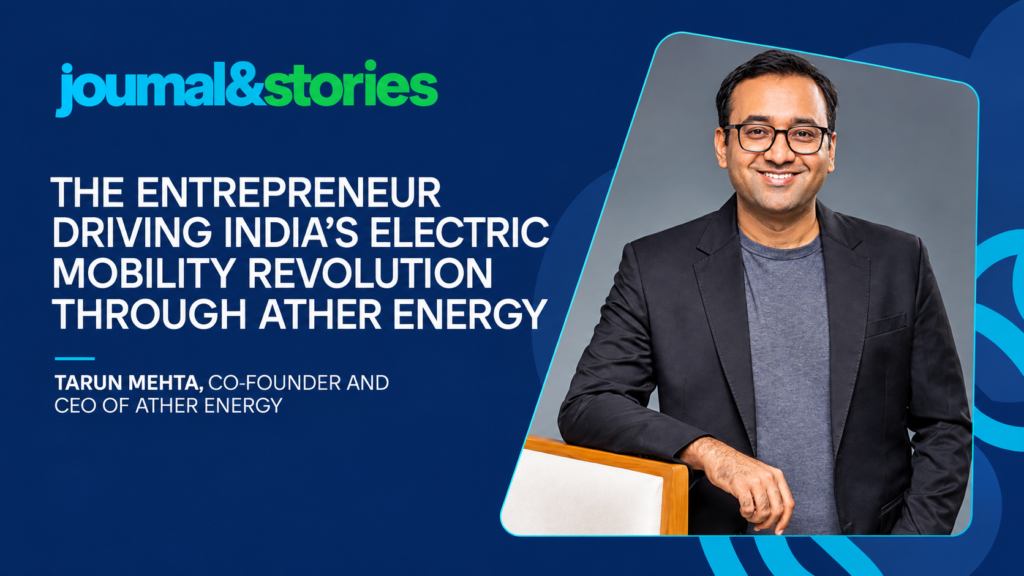




















































































































































































































Tarun Mehta: The Entrepreneur Driving India’s Electric Mobility Revolution Through Ather Energy.
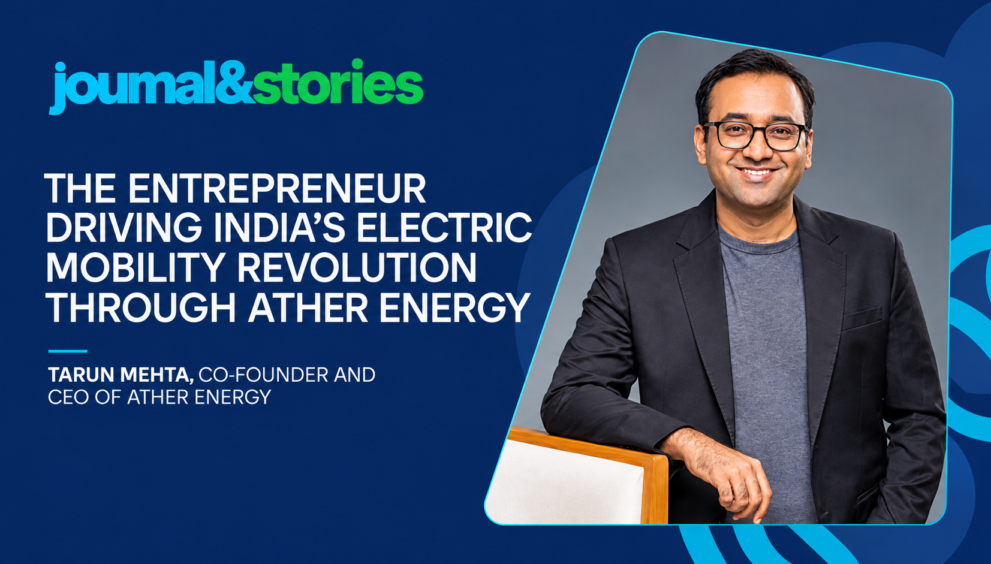

- Tarun Mehta co-founded Ather Energy in 2013 with Swapnil Jain after exploring battery technology and electric vehicle development. His engineering background helped shape the company’s focus on product innovation and connected mobility.
- From the Ather 450 series to the family-oriented Rizta, Ather has expanded its product portfolio to serve different customer needs. Its strategy combines electric scooters with software, charging infrastructure, and customer services.
- As Ather enters its next stage of growth, Mehta faces the challenge of balancing innovation with sustainable business expansion. His journey reflects the opportunities and complexities of building an electric vehicle company in India.
India’s electric vehicle industry is changing the way people think about everyday transportation. From reducing dependence on petrol to creating smarter urban mobility solutions, electric scooters are becoming an important part of the country’s automotive landscape. Behind this transformation are entrepreneurs who combine technical knowledge, business understanding, and a willingness to challenge traditional ways of doing things. One such entrepreneur is Tarun Mehta, Co-Founder and CEO of Ather Energy.
Mehta’s journey is closely connected to the growth of India’s electric two-wheeler industry. Alongside his co-founder, Swapnil Jain, he helped establish Ather Energy in 2013 with an ambition to build electric vehicles that could compete on performance, technology, and everyday usability. Rather than treating an electric scooter as simply an alternative to a petrol-powered vehicle, the company set out to create a complete ownership experience supported by software, charging infrastructure, and thoughtful product design.
Early Education and the Foundation of an Engineering Mindset
Tarun Mehta studied Engineering Design at the Indian Institute of Technology Madras (IIT Madras), graduating through its dual-degree programme in 2012. During his time at the institute, he participated in product-development activities and became involved in the entrepreneurial ecosystem.
For Mehta, engineering was not limited to understanding how machines worked. It also offered an opportunity to explore how ideas could be converted into practical products. His academic experience gave him a foundation in design, experimentation, and problem-solving—skills that would later become important in building an electric vehicle company.
His interest in technology developed alongside an understanding that successful products must address real customer needs. A vehicle can look attractive on paper, but it must also perform reliably, remain practical for daily use, and provide value to the person purchasing it.
This combination of technical thinking and real-world application became an important part of Ather Energy’s approach.
From Battery Packs to Building Ather Energy
The beginnings of Ather Energy were rooted in an engineering challenge. Mehta and Jain initially explored battery-pack technology, recognising that batteries were a significant component of electric vehicles. While working on the problem, they began developing a vehicle to test their battery systems.
That process changed the direction of their thinking. They realised that the opportunity extended beyond one component: they could develop an electric vehicle from the ground up.
In April 2013, the two entrepreneurs founded Ather Energy. Their ambition was to build electric scooters that could offer more than basic transportation, combining engineering, connected technology, and a more engaging riding experience.
Starting an automotive company was not a simple undertaking. Vehicle development requires substantial research, repeated testing, manufacturing capabilities, investment, and attention to safety and reliability. It also requires patience because turning a prototype into a commercially available product takes time.
Mehta’s decision to pursue this path demonstrated a willingness to work on a long-term challenge rather than focus only on an immediately marketable idea. The company’s early years were dedicated to developing its technology and preparing a product that could meet the expectations of Indian riders.
The Ather 450: Introducing a Different Electric Scooter Experience
One of Ather Energy’s defining milestones came in 2018, when the company launched its first electric scooter. The Ather 450 series helped establish the brand around performance, connected features, and a technology-focused riding experience.
At a time when many consumers associated electric scooters primarily with basic, low-speed transportation, Ather pursued a different product positioning. Its scooters were designed to appeal to riders who wanted modern styling, responsive performance, digital interfaces, and convenient ownership features.
The importance of this approach extended beyond the vehicle itself. It encouraged conversations about what electric two-wheelers could offer Indian consumers and how technology could become an integral part of the everyday riding experience.
For Mehta, product development has remained central to the company’s identity. Ather’s journey illustrates how engineering decisions, customer expectations, and business strategy must work together. A technically advanced product still needs to be useful, accessible, and supported by dependable services if it is to succeed in the marketplace.
Building an Ecosystem Beyond the Scooter
One of Ather Energy’s distinguishing ideas has been its focus on the broader electric vehicle ecosystem. Buying an electric scooter is only one part of the ownership journey. Customers also need access to charging, reliable service, software support, and information that helps them understand their vehicle.
Ather Grid, the company’s charging network, was developed to address one of the practical questions surrounding electric mobility: where and how can riders charge their vehicles conveniently?
This infrastructure approach reflects a wider understanding of the electric vehicle market. The growth of EV adoption depends not only on vehicle availability but also on how easily people can integrate charging into their daily routines.
Software and connected features have also played a role in Ather’s product strategy. By bringing hardware and software development together, the company has sought to make its scooters more responsive to customer needs and technological improvements.
For Mehta, this integrated approach connects product design with the complete ownership experience. It also creates a more demanding business model because the company must develop and maintain several interconnected capabilities rather than focus exclusively on manufacturing vehicles.
Expanding the Market with the Ather Rizta
While the Ather 450 range helped establish the company’s performance-oriented identity, the next stage of growth required reaching a broader group of customers.
In 2024, Ather introduced the Rizta, a family-oriented electric scooter designed with everyday practicality in mind. Its larger seat and storage space reflected a focus on riders who prioritise comfort, convenience, and family use alongside technology.
The launch represented an important product strategy: expanding the customer base without abandoning the company’s engineering-led approach.
Indian scooter buyers have different requirements. Some are attracted by performance and connected features, while others place greater importance on comfort, storage, ease of use, and affordability. Serving these customers requires a wider understanding of how people use their vehicles in real life.
The Rizta gave Ather an opportunity to address needs beyond its established performance-focused audience and strengthen its presence in markets outside its traditional strongholds.
Leadership, Research, and Long-Term Thinking
As CEO, Tarun Mehta oversees Ather Energy’s product development, business strategy, operations, and growth initiatives. His role involves balancing the company’s engineering ambitions with the commercial realities of operating in a competitive automotive market.
Research and development remain important to this strategy. Electric vehicle technology continues to evolve, with battery performance, vehicle software, manufacturing efficiency, and charging solutions all influencing the customer experience.
Mehta has consistently highlighted the importance of technology and research in building an enduring electric vehicle business. In Ather’s 2025 shareholder and earnings communications, the company discussed continued investment in research and development alongside efforts to expand its products, retail presence, and manufacturing operations.
His leadership journey also reflects the challenge of making innovation commercially sustainable. Developing advanced products is only one part of the process; companies must also manage costs, build distribution networks, serve customers, and generate sufficient demand.
These responsibilities become more complex as a company grows. The decisions that help a start-up develop its first product may differ from those needed to expand into new regions and serve a larger customer base.
Recognition and Industry Contribution
Mehta’s work has received recognition from business and entrepreneurship organisations. His professional profile includes recognition in Forbes India’s 30 Under 30 list in 2018 and Fortune India’s 40 Under 40 lists in multiple years. He has also received awards associated with entrepreneurship and innovation.
Beyond individual recognition, his contribution can be understood through the business he helped build. Ather has brought together vehicle engineering, software, charging infrastructure, and retail operations within a single electric mobility strategy.
His experience also contributes to wider discussions about India’s automotive future, including domestic technology development, the development of EV-supportive infrastructure, and the conditions required for electric mobility to reach more consumers.
Recognition can highlight a leader’s achievements, but the longer-term significance of such work depends on the company’s ability to continue innovating, respond to customers, and operate sustainably.
Challenges in India’s Competitive EV Market
Despite the opportunities, the electric two-wheeler industry faces considerable challenges. Consumers still weigh purchase prices, charging convenience, battery performance, maintenance, and resale value when deciding whether to switch from petrol-powered vehicles.
Manufacturers must also deal with changing market conditions, competition, distribution costs, and the financial demands of expanding production. Government incentives and policy decisions can influence the pace of electric vehicle adoption, making long-term planning particularly important.
Mehta has spoken publicly about the need to scale Ather’s business sustainably. The company’s expansion requires it to balance investment in technology with wider distribution, customer service, and financial performance.
These challenges are not unique to Ather. They reflect the wider transition taking place across the electric mobility sector. Building a successful EV company requires more than introducing an innovative product; it requires creating a business capable of adapting as technology, consumer preferences, and market conditions change.
Ather Energy’s Next Chapter
Ather Energy entered a new phase in 2025 when it became a publicly listed company. In its September 2025 annual general meeting, the company’s leadership discussed its development from an engineering-led start-up into a business with broader ambitions across products, manufacturing, retail, and charging infrastructure.
For Mehta, this stage brings opportunities as well as greater responsibility. Public-market participation increases the importance of transparent communication, disciplined execution, and the ability to demonstrate progress over time.
The company’s future will depend on several interconnected factors: developing products that customers want, expanding its reach, improving operational efficiency, and maintaining the quality of its technology and services.
The electric mobility market will continue to evolve, and no company can rely on early achievements alone. Consistent execution and the ability to learn from customers will remain important as Ather pursues its next stage of growth.
Conclusion: An Entrepreneur Shaping the Future of Mobility
Tarun Mehta’s journey from IIT Madras to leading Ather Energy demonstrates how an engineering problem can develop into a much larger entrepreneurial opportunity. What began with an interest in battery technology grew into a company focused on electric scooters, connected features, charging infrastructure, and the wider customer experience.
His story is not simply about launching an electric vehicle. It is about recognising that meaningful innovation requires multiple elements to work together: research, product design, manufacturing, customer understanding, and a sustainable business strategy.
Ather Energy’s journey also reflects the broader changes taking place in India’s automotive industry. As consumers explore alternatives to conventional transportation, companies are being challenged to create vehicles that combine performance, convenience, reliability, and value.
For aspiring entrepreneurs, Mehta’s experience offers a practical lesson: a promising idea is only the beginning. Turning it into a lasting business requires patience, technical understanding, adaptability, and a willingness to solve problems that may take years to overcome.
As CEO and co-founder, Tarun Mehta remains closely associated with Ather Energy’s mission to develop electric mobility products and experiences for Indian consumers. The company’s continuing journey will show how effectively its engineering-led beginnings can translate into long-term growth in an increasingly competitive market.