






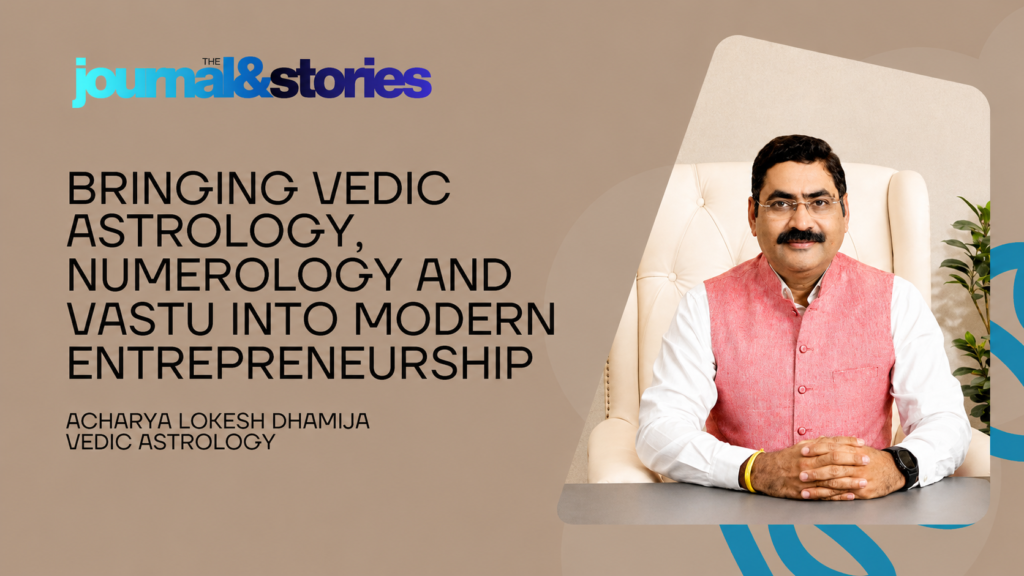








































































































































































































































Acharya Lokesh Dhamija: Bringing Vedic Astrology, Numerology and Vastu into Modern Entrepreneurship.
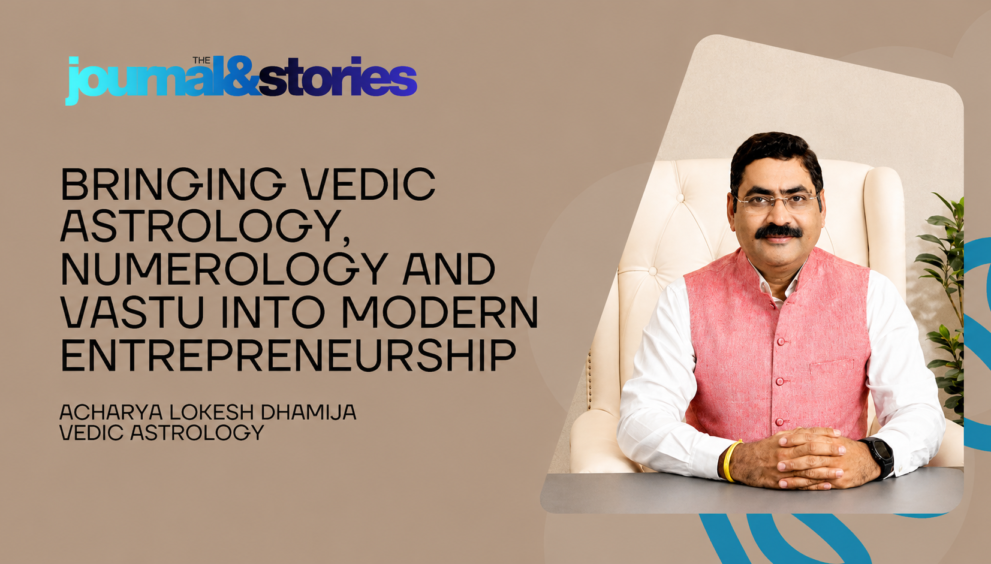

- Acharya Lokesh Dhamija connects Vedic Astrology, Numerology and Vastu with the evolving needs of today’s entrepreneurs.
- His approach focuses on timing, self-awareness, business identity and workplace harmony alongside modern business strategies.
- The integration of ancient Indian wisdom with technology and contemporary thinking offers entrepreneurs a fresh perspective on growth and decision-making.
In a world driven by technology, data, innovation and rapid decision-making, entrepreneurs are constantly looking for new ways to understand uncertainty and build sustainable success. While business strategies, market research and financial planning remain essential, many leaders also turn toward India’s ancient knowledge systems for perspective, balance and guidance.
Acharya Lokesh Dhamija represents this fascinating intersection of Vedic Astrology, Numerology and Vastu with modern entrepreneurship. His approach reflects a growing interest in combining traditional Indian wisdom with contemporary business thinking, helping individuals look beyond conventional strategies and consider factors such as timing, energy, environment and personal strengths while making important decisions.
The Changing Face of Entrepreneurship
Entrepreneurship has changed dramatically over the last few decades. Today, business owners operate in highly competitive markets where consumer preferences can change overnight and technology can transform entire industries.
An entrepreneur may have a strong business idea, but success often depends on several other factors—leadership, timing, decision-making, adaptability, team management and the ability to handle uncertainty.
This is where traditional disciplines can offer a different perspective.
Vedic Astrology, Numerology and Vastu have been practiced in India for generations. Traditionally, these systems have been associated with personal guidance, planetary influences, numbers and spatial harmony. In the modern entrepreneurial context, practitioners like Acharya Lokesh Dhamija bring these concepts into conversations around career choices, business decisions, workplace environments and personal development.
Rather than viewing ancient wisdom and modern business as opposites, this approach presents them as potentially complementary perspectives.
Understanding the Role of Vedic Astrology
Vedic Astrology, also known as Jyotish, is an ancient Indian system that studies planetary positions and their relationship with different aspects of life.
For entrepreneurs, astrology is often explored as a tool for understanding personality traits, strengths, challenges and important periods of decision-making. Business owners may seek astrological guidance when considering major professional transitions, launching ventures, entering partnerships or evaluating significant changes in their careers.
The appeal lies partly in the desire for a broader perspective.
Business decisions are rarely completely predictable. Even with market research and financial projections, entrepreneurs face factors that cannot always be controlled. Astrology can therefore become, for believers, a reflective framework for considering timing and personal tendencies.
Acharya Lokesh Dhamija’s association with Vedic Astrology reflects how this ancient discipline can be presented in a language that resonates with today’s entrepreneurs—one that connects personal development with professional ambitions.
Numerology and the Power of Numbers
Numbers have always played an important role in business. From financial forecasting and sales targets to analytics and performance measurements, modern entrepreneurship is surrounded by numbers.
Numerology approaches numbers from an entirely different philosophical perspective.
It is traditionally based on the belief that numbers can carry symbolic meanings and can be associated with particular characteristics or energies. In business-related consultations, numerology may be considered while examining names, dates and other numerical elements connected with an individual or enterprise.
For entrepreneurs interested in this field, numerology can provide another layer of personal reflection.
A business name, for example, is more than just a label. It becomes part of a company’s identity, branding and public recognition. Entrepreneurs may therefore explore numerological interpretations alongside practical considerations such as market positioning, memorability and brand strategy.
The modern appeal of numerology comes from its ability to connect something as familiar as numbers with deeper questions about identity, direction and purpose.
Vastu: Creating Harmonious Business Spaces

If astrology focuses largely on cosmic influences and numerology on numbers, Vastu Shastra brings attention to the physical environment.
Vastu is an ancient Indian architectural and spatial tradition concerned with the relationship between people, buildings and their surroundings. In contemporary business settings, Vastu principles are sometimes considered when designing offices, arranging workspaces or planning commercial properties.
For entrepreneurs, the workplace is more than a physical location. It is where ideas are developed, employees collaborate, meetings take place and important decisions are made.
A thoughtfully designed environment can influence how people experience a space. While modern workplace design focuses on lighting, ergonomics, productivity and employee well-being, Vastu offers a traditional framework centered on spatial harmony and directional principles.
Acharya Lokesh Dhamija’s work brings this traditional perspective into the modern entrepreneurial conversation, encouraging business owners to consider the relationship between their physical surroundings and their professional objectives.
Connecting Ancient Knowledge with Modern Thinking
One of the most interesting aspects of Acharya Lokesh Dhamija’s approach is the attempt to make traditional knowledge relevant to contemporary professional life.
Modern entrepreneurs are increasingly interested in holistic approaches to success. They may invest in leadership development, mindfulness, personal branding, wellness and productivity alongside conventional business education.
This changing mindset creates space for traditional Indian knowledge systems to enter entrepreneurial discussions.
The key is understanding their role appropriately. Vedic Astrology, Numerology and Vastu can be viewed as complementary frameworks for reflection and guidance rather than replacements for financial analysis, legal advice, market research or sound business planning.
When used thoughtfully, they can become part of a broader decision-making philosophy.
The Entrepreneur Behind the Enterprise
Every successful business is ultimately influenced by the person leading it.
An entrepreneur’s mindset, confidence, emotional resilience and ability to make decisions can have a significant impact on the direction of a company. This is why personal development has become such an important part of modern entrepreneurship.
Acharya Lokesh Dhamija’s work emphasizes the connection between individual characteristics and professional aspirations. Traditional systems such as astrology and numerology can encourage individuals to reflect on their strengths, behavioral patterns and goals.
For an entrepreneur, this type of self-reflection can be valuable.
Knowing where one feels confident, where one tends to hesitate and how one responds to challenges can help create greater self-awareness. While business success ultimately depends on real-world execution, self-awareness can influence how effectively a leader handles those challenges.
Timing and Decision-Making in Business
Timing is one of the most difficult elements of entrepreneurship.
A great product introduced at the wrong time can struggle. A promising partnership may fail because the circumstances are not right. A business expansion may succeed or fail depending on market conditions, financial readiness and leadership decisions.
Modern businesses use market data, consumer trends and economic indicators to evaluate timing.
Traditional astrology approaches timing through a different lens.
Entrepreneurs who believe in Vedic Astrology may seek guidance regarding favorable periods for important professional decisions. This creates an interesting meeting point between traditional beliefs and modern strategic planning.
The most balanced approach is to treat such perspectives as an additional consideration while continuing to rely on evidence, preparation and practical business analysis.
Building Confidence in Uncertain Times

Entrepreneurship involves uncertainty by nature.
Founders regularly experience moments when they must make decisions without knowing exactly what the future will bring. This uncertainty can create stress, hesitation and self-doubt.
Traditional guidance can sometimes provide entrepreneurs with a sense of structure during these moments.
Whether someone consults astrology, numerology or Vastu from a spiritual perspective, the process can encourage them to pause, evaluate their priorities and think carefully before taking action.
For many individuals, this reflective process itself can be meaningful.
The real strength of such guidance may therefore lie not only in predictions or recommendations, but also in encouraging entrepreneurs to become more conscious about the decisions they make.
A Holistic Perspective on Business Success
Success in entrepreneurship is often measured through revenue, growth, market share and profitability. However, today’s entrepreneurs increasingly recognize that long-term success involves more than financial performance.
Leadership, purpose, employee relationships, personal well-being and social impact are also becoming important measures of a successful enterprise.
A holistic business philosophy considers the entrepreneur as a complete individual rather than simply a profit-generating decision-maker.
This is where the combination of traditional wisdom and modern entrepreneurship becomes particularly interesting.
Vedic Astrology may encourage self-understanding and timing. Numerology may offer symbolic perspectives around names and numbers. Vastu may focus attention on physical surroundings. Modern entrepreneurship, meanwhile, contributes strategy, innovation, technology and measurable performance.
Together, these perspectives can create a broader conversation about what it means to build and lead a business.
Why Traditional Wisdom Still Matters Today
India’s ancient knowledge traditions have survived for centuries because they continue to hold cultural and philosophical significance.
In the digital age, people have access to more information than ever before, yet uncertainty has not disappeared. In some ways, the speed of modern life has created an even greater need for reflection and balance.
Entrepreneurs, in particular, operate under constant pressure to perform, innovate and adapt.
The renewed interest in traditional wisdom may therefore reflect a desire to reconnect with principles that emphasize balance, awareness and long-term thinking.
Acharya Lokesh Dhamija stands within this evolving space, where traditional practices are being discussed in the context of contemporary ambitions.
The Future of Spirituality and Entrepreneurship
The relationship between spirituality and business is likely to continue evolving.
As entrepreneurs become more interested in purpose-driven leadership and holistic development, traditional Indian practices may increasingly become part of conversations surrounding personal and professional growth.
However, the future will likely belong to approaches that combine tradition with practicality.
Entrepreneurs need inspiration, but they also need execution. They need vision, but they also need strategy. They need confidence, but they also need evidence-based decision-making.
The strongest entrepreneurial mindset is therefore one that remains open to different perspectives while maintaining critical thinking and practical judgment.
Conclusion
Acharya Lokesh Dhamija represents an intriguing connection between ancient Indian wisdom and the modern world of entrepreneurship. Through Vedic Astrology, Numerology and Vastu, his work reflects a broader movement toward holistic approaches to professional and personal growth.
In an entrepreneurial landscape dominated by technology, analytics and constant innovation, these traditional systems offer a different way of looking at decision-making—one focused on self-awareness, timing, numbers and environmental harmony.
Whether approached as spiritual guidance, cultural wisdom or a framework for personal reflection, these disciplines continue to attract interest among people seeking deeper perspectives on their professional journeys.
Ultimately, entrepreneurship is about much more than starting a company. It is about understanding opportunities, navigating uncertainty, making thoughtful decisions and creating something meaningful.
The intersection of ancient wisdom and modern enterprise offers entrepreneurs another lens through which they can explore that journey—and Acharya Lokesh Dhamija’s work highlights how timeless Indian traditions can continue to find relevance in the ambitions of a new generation of business leaders.
📞 +91-9355250111
📧 contact@jyostroindia.com
Website Link: https://www.jyostro.com

