



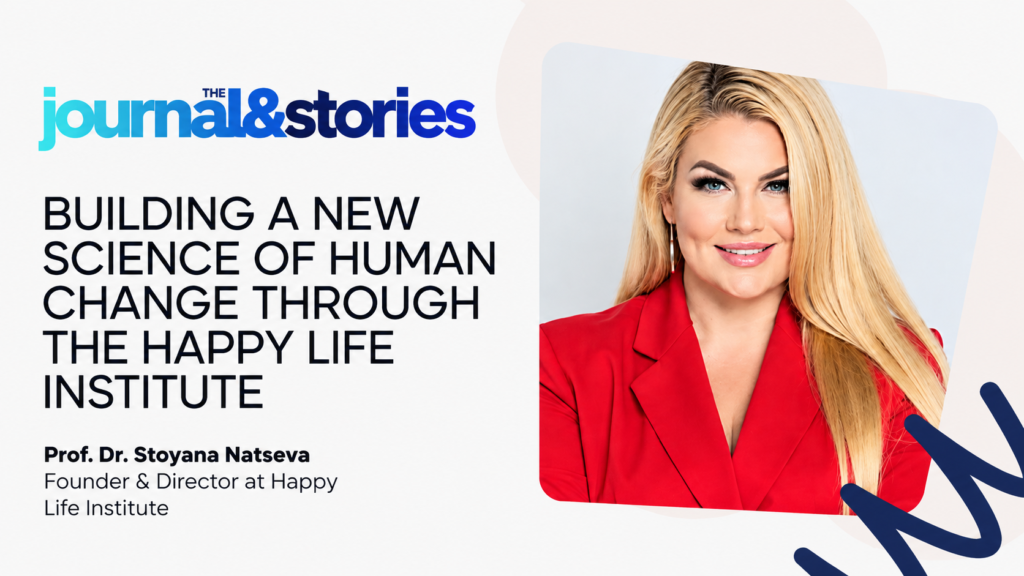





























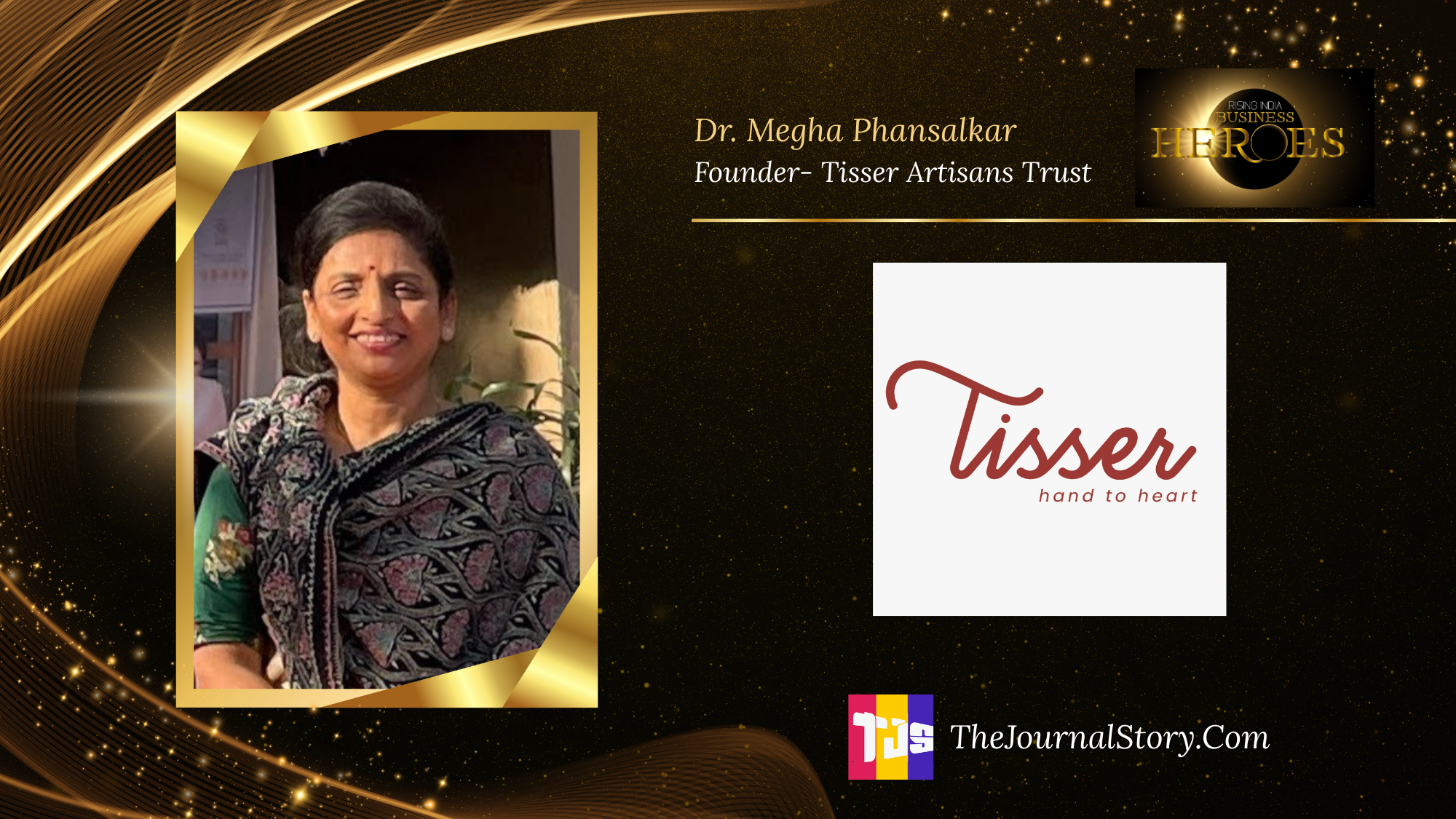
































































































































































Prof. Dr. Stoyana Natseva: Building a New Science of Human Change Through the Happy Life Institute.
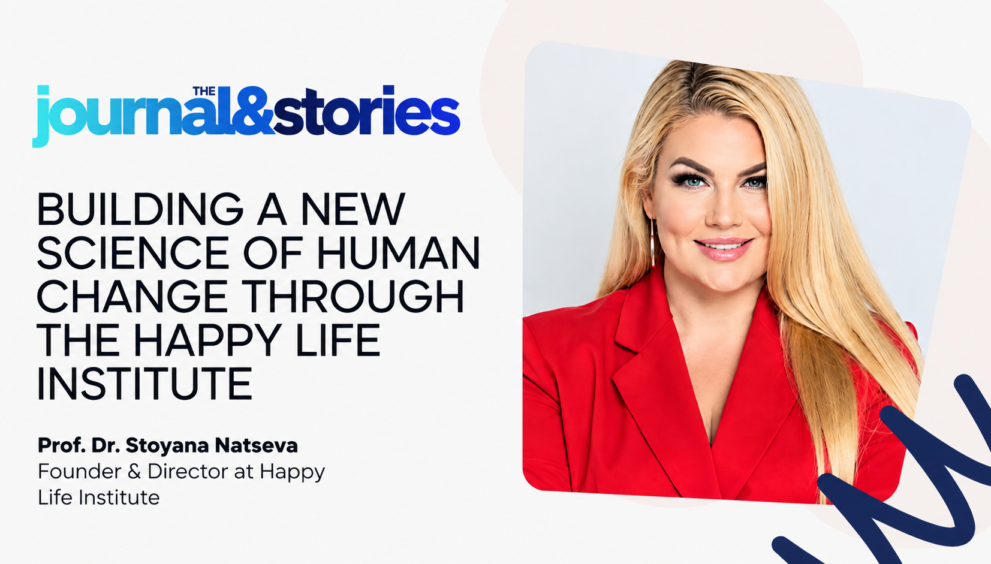

- Prof. Dr. Stoyana Natseva has built her career across psychology, education, leadership, and human development, creating practical approaches to meaningful personal change.
- Through the Happy Life Institute for Direct Change Science, she is bringing research, education, behavioural science, and psychology together to explore how sustainable human change happens.
- Her work with Happy Life Academy, books, educational programs, and research reflects a broader mission to connect scientific knowledge with real-world personal and professional transformation.
This is the space in which Prof. Dr. Stoyana Natseva has built much of her professional work. A psychologist, researcher, educator, author, entrepreneur, and educational leader, Natseva has spent years developing educational and transformational approaches focused on personal and professional development. Her latest institutional initiative, the Happy Life Institute for Direct Change Science, represents another step in that journey—bringing together psychology, behavioural science, education, identity, and research into human change.
From Business Leadership to Psychology and Human Development
Natseva’s professional journey is notable partly because it did not begin inside academia or personal-development education. According to her published profile and media materials, she spent more than two decades working in the banking sector and held senior leadership responsibilities before moving increasingly toward psychology, education, and human transformation.
That background gave her an unusual combination of experiences. Business leadership introduced her to organizational structures, decision-making, responsibility, and performance, while psychology and education opened a different perspective: understanding the human being behind those decisions.
Over time, these areas became connected in her work. Instead of treating personal development and professional development as completely separate subjects, Natseva has focused on the relationship between identity, behaviour, leadership, and meaningful change.
Her academic profile includes doctoral-level qualifications in psychology and educational psychology, as well as a professorship in psychology and education.
The Vision Behind Happy Life
The broader ecosystem created around Natseva’s work includes Happy Life Academy®, educational programs, professional communities, publications, and now the Happy Life Institute for Direct Change Science.
Happy Life Academy reports having trained more than 100,000 participants and more than 3,000 certified specialists. The academy focuses on areas such as personal development, business psychology, coaching, leadership, and professional education.
But the development of an educational platform was not the endpoint of Natseva’s work.
The establishment of the Happy Life Institute reflects a move toward a stronger research orientation—asking not simply whether people want to change, but how human change actually happens and what can make that change sustainable.
That distinction is important.
Motivation can create a temporary emotional shift. Sustainable change requires deeper work.
Happy Life Institute for Direct Change Science
The Happy Life Institute for Direct Change Science was introduced as a research-oriented institution with the ambition of advancing scientific understanding of human change. Its stated areas include psychology, behavioural science, education, identity, autobiographical meaning-making, human performance, and emerging questions around human-AI interaction.
The Institute’s guiding idea is expressed through three simple words:
Research. Education. Impact.
Its work is intended to provide a platform for scientific research and publication, international academic collaboration, interdisciplinary dialogue, conference participation, knowledge dissemination, and responsible translation of research into education and practical applications.
For Natseva, the Institute is therefore more than another educational brand. It represents the research-oriented continuation of work developed over years through psychology, writing, teaching, and practical experience.
The Internal Autobiographical Map
One of the central concepts associated with Natseva’s work is the Internal Autobiographical Map (IAM).
The method focuses on the connection between a person’s personal history, identity, autobiographical memory, and the deeper patterns that influence their present life. According to the Happy Life Academy, IAM is designed as a systemic model for understanding and consciously working with these patterns.
This approach begins with a simple but powerful observation: people do not make decisions in a vacuum.
Our experiences become memories. Memories influence how we understand ourselves. Our understanding of ourselves can shape expectations, relationships, reactions, and choices.
By looking at these connections, personal development becomes less about simply trying to “think positively” and more about understanding why certain patterns continue to appear.
That focus on personal history is one of the distinctive themes running through Natseva’s work.
Direct Change Solution®
Alongside IAM, Natseva has developed the Direct Change Solution® (DCS®) methodology. The Happy Life Academy describes it as a change-management system integrating the IAM approach with practical work around personal and professional transformation.
The broader objective is to create a structured way of approaching change.
Instead of asking only, “What do I want to achieve?”, the process encourages deeper questions:
What is shaping my current behaviour?
Which patterns are influencing my decisions?
What needs to change internally for external results to become sustainable?
These questions are particularly relevant in leadership, coaching, education, and professional development, where changing behaviour often requires more than acquiring new information.
An Author and Educator
Natseva’s influence has also been expressed through writing. Her current profile lists more than 20 books and several scientific monographs, covering subjects connected with personal development, relationships, inner transformation, abundance, conscious living, and related areas.
Writing has allowed her to take ideas that might otherwise remain inside classrooms, seminars, or research environments and make them accessible to a much broader audience.
Her work also extends into professional education. Happy Life Academy describes MBA and DBA-level programs that incorporate areas including personal development, business psychology, coaching, and leadership.
This educational focus reflects a larger belief visible throughout her career: knowledge becomes more valuable when people can apply it in real life.
Bringing Science and Practical Education Together
One of the most interesting aspects of Natseva’s current direction is the attempt to connect research and practical education.
Academic research can sometimes feel distant from everyday life. At the same time, personal-development education can sometimes move faster than the evidence supporting its claims.
The Institute’s stated mission sits between these worlds.
Its research agenda includes behavioural change, identity, psychological well-being, critical thinking, digital identity, behavioural autonomy, and human-AI interaction.
This is especially relevant as technology changes the way people learn, communicate, work, and even understand themselves.
The emergence of artificial intelligence, for example, raises new questions about human decision-making, autonomy, digital identity, and the relationship between technology and behaviour. These questions are increasingly difficult to separate from psychology and education.
Research and the Importance of Evidence
Natseva’s recent research-related work also demonstrates an effort to move toward empirical examination of transformational models.
A September 2026 profile published by Happy Life Academy reported research involving 345 participants, with model-fit indicators including CFI = 0.968 and RMSEA = 0.038, while also explicitly noting that the findings should not be treated as final validation and that longitudinal research, cross-cultural testing, replication, and independent validation remain necessary.
That qualification is important.
Scientific models become stronger through continued testing, replication, and independent examination. By placing these limitations alongside the reported findings, the discussion becomes more balanced and research-oriented.
Recognition and Global Reach
Natseva’s work has also received international recognition. Her official profile lists recognitions connected with Guinness World Records, the World Book of Records, and international business and humanitarian organizations.
Happy Life Academy reports that more than 100,000 people have participated in its educational programs and that its content reaches an international audience.
However, perhaps the more significant part of this reach is the infrastructure built around education itself—books, training programs, professional certification, research, public communication, and international collaboration.
Together, these elements have allowed Natseva’s work to develop beyond the traditional role of an individual author or trainer.
A Broader Definition of Leadership
For Natseva, leadership appears to extend beyond managing organizations.
It includes understanding people, recognizing behavioural patterns, developing self-awareness, and creating environments where learning can produce practical change.
Her transition from banking leadership to psychology, education, authorship, and research demonstrates how professional identity can evolve over time.
Rather than leaving her earlier experience behind, she has incorporated it into a broader approach.
Business provided one perspective.
Psychology provided another.
Education created a way to share knowledge.
Research provided a framework for testing ideas.
And the Happy Life Institute brings these dimensions together around a central question: how can human change be better understood, studied, and translated into meaningful practice?
Looking Ahead
The future direction of the Happy Life Institute is likely to be shaped by the growing intersection of psychology, behavioural science, education, technology, and human identity.
As AI becomes increasingly integrated into everyday life, questions surrounding critical thinking, digital identity, behavioural autonomy, and human-AI interaction will become increasingly relevant. These are among the areas already identified in the Institute’s research agenda.
For Prof. Dr. Stoyana Natseva, this represents a natural continuation of her professional journey.
Her story is not simply about creating another personal-development institution. It is about building an ecosystem in which research, education, and practical transformation can communicate with one another.
Conclusion
Prof. Dr. Stoyana Natseva’s journey reflects a transition from corporate leadership to psychology, education, authorship, and research. Through Happy Life Academy and now the Happy Life Institute for Direct Change Science, she is working to create structured approaches to understanding human behaviour and sustainable change.
Her work combines academic interests with practical education and a strong focus on personal transformation. At the heart of this approach is the belief that lasting change requires more than temporary motivation—it requires understanding the stories, identities, behaviours, and patterns that shape human lives.
As the Happy Life Institute develops its research agenda, its work will add another dimension to Natseva’s broader mission: not only helping people pursue change, but also contributing to the growing conversation about how meaningful human change can be understood, studied, and sustained.
In a world that changes faster every year, understanding the human capacity to change may be one of the most important areas of all.

