

































































































































































































































































Cyclone Arnab – Why Is India’s Weather Becoming So Extreme?
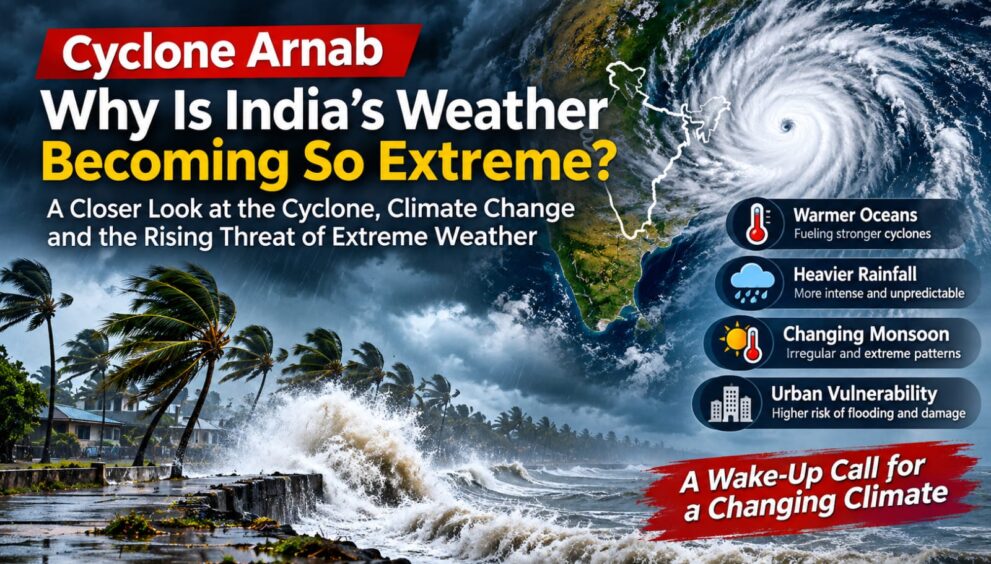

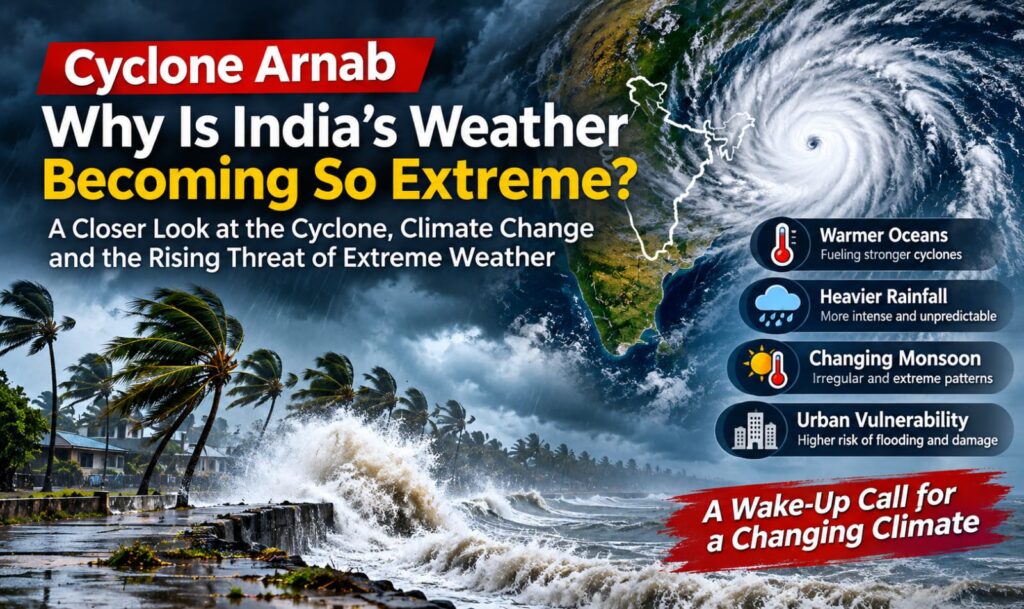
India’s weather has felt increasingly unpredictable in recent years. From intense downpours and flooding to heatwaves, severe storms and sudden changes in temperature, extreme conditions are disrupting daily life and putting pressure on homes, farms, transport and public services. Cyclone Arnab, which formed over the Bay of Bengal in late October 2026 and made landfall along the Andhra Pradesh coast, is a timely reminder of the risks faced by a country with a long and densely populated coastline.
Cyclone Arnab: What happened?
The India Meteorological Department tracked a system over the Bay of Bengal that strengthened into Cyclone Arnab. NASA’s Earth Observatory reported that the storm emerged on October 25 and made landfall on the Andhra Pradesh and Yanam coast early on October 28. Satellite and meteorological reporting put its sustained winds near landfall at around 130 km/h. The storm brought damaging winds and heavy rain, prompting warnings and precautionary action in vulnerable coastal areas. The precise effects varied by location, and official local assessments remain the best source for confirmed damage and casualty figures.
Cyclones are not unusual in the North Indian Ocean. What matters is how quickly a storm intensifies, where it travels, how much rain it carries and how exposed communities are. Even after winds weaken over land, intense rainfall can cause flooding, landslides, damage to crops and disruption to roads and power supplies.
Why does the weather seem so dramatic?
There is no single explanation for every storm or flood. Natural climate variability, ocean conditions, atmospheric circulation, land use and human-caused climate change all influence weather. Scientists are particularly concerned that global warming is increasing the risks associated with several types of extreme weather.
1. Warmer oceans can fuel storms
Tropical cyclones draw energy from warm ocean water. Higher sea-surface temperatures can provide additional heat and moisture to a developing storm and may contribute to rapid intensification when other atmospheric conditions are favourable. The Bay of Bengal is especially important for India because storms forming there can affect the eastern coastline, including Odisha, Andhra Pradesh and West Bengal.
2. A warmer atmosphere can bring heavier rain
As air warms, it can hold more water vapour—about 7% more for each 1°C of warming, as a broad physical rule. When weather systems trigger rainfall, that extra moisture can contribute to heavier downpours. The result can be flash flooding, overflowing drains and rivers, and damage to homes, roads and crops. This does not mean every rainfall event is caused by climate change; it means the background conditions can raise the odds or intensity of some extremes.
3. Monsoon rainfall is uneven
India depends heavily on the monsoon, but rainfall is not distributed evenly across time or geography. Some areas can experience long dry spells while others receive very heavy rain in a short period. Ocean-atmosphere patterns, local weather systems and changing land conditions all play a role. This unevenness makes planning difficult for farmers, water managers and city authorities.
4. Urban growth can magnify the damage
Climate change is not the only reason flooding becomes severe. Construction on floodplains, loss of wetlands, blocked drains, tree loss and large areas of concrete can prevent rainwater from soaking into the ground or flowing away safely. A storm that might once have caused limited disruption can become a major urban emergency where drainage and land-use planning are inadequate.
Is an emergency declared in 11 countries?
A claim that a weather emergency has been declared in 11 countries specifically because of Cyclone Arnab should not be repeated without reliable confirmation. Cyclone Arnab was an event affecting India’s east coast; it was not a single storm emergency spanning 11 countries. Different governments may issue their own weather alerts or emergency declarations for separate events, but those should be checked individually against official announcements. For India, follow the India Meteorological Department, state disaster-management authorities and local administration for current warnings.
What should India do next?
India needs to keep strengthening early-warning systems, evacuation planning, cyclone shelters, resilient electricity and communication networks, coastal protection and urban drainage. Wetlands and natural floodplains should be protected wherever possible. Cities need drainage systems designed for intense rainfall, regular maintenance and sensible controls on construction in high-risk areas. Farmers need timely forecasts, crop insurance and support to adapt planting and water-use decisions.
People can also reduce their risk. During a cyclone or severe-weather warning, follow official instructions, move to designated shelters when asked, keep phones charged, store drinking water and essential medicines, and avoid flooded roads, fallen power lines and the seafront. Do not rely on forwarded social-media messages when official forecasts are available
Conclusion: preparedness must keep pace with a changing climate
Cyclone Arnab is a reminder that extreme weather can affect communities quickly and that the consequences depend on both the storm and the preparedness of the places in its path. Climate change is influencing the conditions in which many weather extremes occur, but local vulnerability, infrastructure and disaster planning also shape the outcome. India’s task is therefore twofold: reduce greenhouse-gas emissions over time and adapt now to risks that are already being experienced. The weather may be difficult to control, but better science, planning and public preparedness can save lives.

