






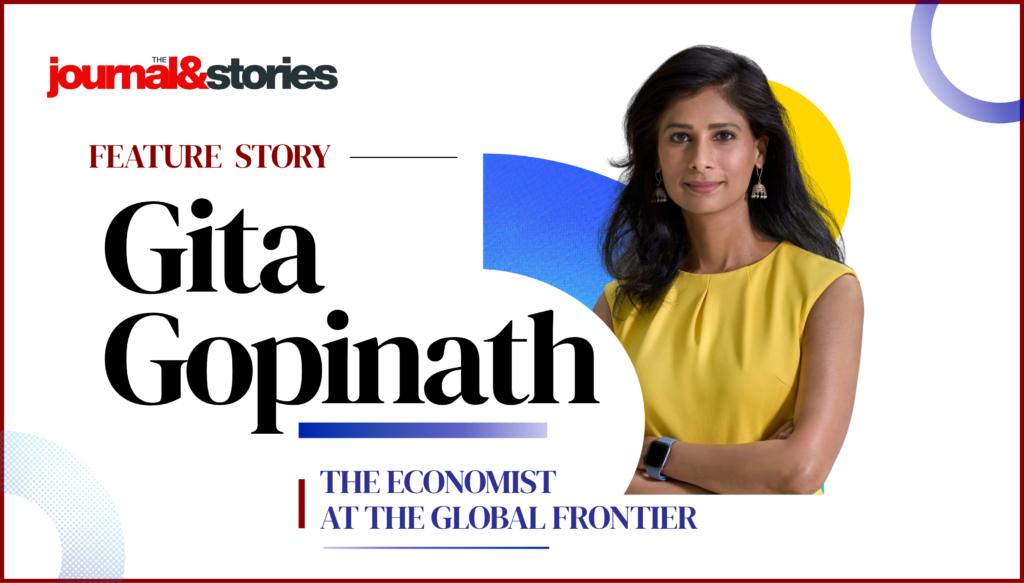



































































































































































































































































Gita Gopinath: The Economist at the Global Frontier
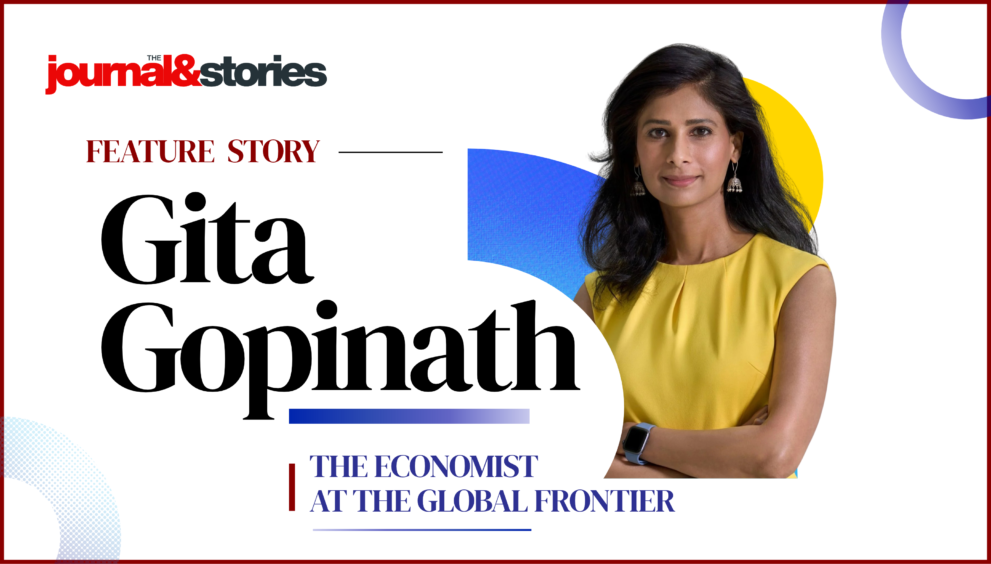

- In 2019, she became the first woman to serve as Chief Economist of the International Monetary Fund (IMF).
- She was named First Deputy Managing Director of the IMF in January 2022.
- She directed significant economic research and policy discussions throughout the COVID-19 pandemic.
- She is globally acknowledged for her contributions to international finance, global trade, and economic policymaking.
Gita Gopinath ranks among the most influential economists of her generation. From her academic origins in India to becoming the first woman Chief Economist of the International Monetary Fund (IMF), her path reflects intellectual brilliance, resolve, and global leadership. Through her research on international finance, global trade, monetary policy, and economic stability, she has helped shape how the world comprehends and reacts to major economic challenges.
From Kolkata to the World: The Early Life and Journey of Gita Gopinath
Gita Gopinath was born in Kolkata, India, where she passed her early years cultivating an interest in education and economics. Growing up in a country undergoing substantial economic transformation, she observed firsthand how financial policies, international trade, and economic reforms could affect people’s lives.
Her academic path started at Lady Shri Ram College, University of Delhi, where she earned a Bachelor of Arts degree in Economics in 1992. She later completed her master’s degrees in Economics from the Delhi School of Economics and the University of Washington.
Resolved to deepen her grasp of international economics, she pursued a Ph.D. at Princeton University in the United States, completing her doctorate in 2001.
Her educational journey established the groundwork for a remarkable career in economic research and international policymaking.
Building an Academic Career at Leading Universities
After finishing her doctorate, Gita Gopinath launched her professional academic career as an Assistant Professor of Economics at the University of Chicago’s Booth School of Business in 2001.
In 2005, she joined Harvard University, where she steadily built her reputation as a respected voice in international finance and macroeconomics.
Her research investigated some of the most critical questions confronting the global economy, including exchange rates, international trade, financial crises, monetary policies, and government debt.
Through her academic publications and research contributions, she gained recognition among leading economists working to comprehend the complexities of the international financial system.
She also acted as co-editor of the American Economic Review and contributed to several significant academic research initiatives.
Her work showed how economic research could offer practical insights into the challenges faced by governments, financial institutions, and businesses worldwide.
Making History: The First Woman Chief Economist of the IMF
One of the most notable milestones in Gita Gopinath’s career arrived in October 2018, when the International Monetary Fund appointed her as its Chief Economist and Economic Counsellor.
She formally took up the position in January 2019, becoming the first woman to hold this prestigious role in the IMF’s history.
The appointment marked a significant achievement not only in her professional journey but also in the broader representation of women in global economic leadership.
As Chief Economist, she became responsible for supervising the IMF’s Research Department and contributing to its understanding of major international economic developments.
She played a key role in preparing the organisation’s World Economic Outlook, one of the world’s most closely followed economic publications.
Her work assisted policymakers in understanding economic growth, inflation, international trade, financial instability, and the challenges confronting emerging and developing economies.
Leading Economic Thinking During the COVID-19 Pandemic
The COVID-19 pandemic posed an extraordinary challenge to the global economy. Countries faced economic disruptions, declining business activity, employment challenges, and pressure on healthcare systems.
Throughout this difficult period, Gita Gopinath played a significant role in analysing the economic consequences of the pandemic.
As IMF Chief Economist, she led the preparation of several editions of the World Economic Outlook, providing important assessments of the global economic situation and recovery prospects.
She also co-authored a major pandemic proposal that set internationally supported vaccination targets and encouraged cooperation between global institutions.
This initiative contributed to the creation of a Multilateral Task Force involving the IMF, World Bank, World Trade Organization (WTO), and World Health Organization (WHO).
The objective was to enhance international coordination, address vaccine supply challenges, and accelerate access to vaccines, particularly in lower-income countries.
Her contribution demonstrated how economic expertise could support international cooperation during a global crisis.
Rising to the Second-Highest Position at the IMF
In January 2022, Gita Gopinath reached another significant milestone when she became the First Deputy Managing Director of the International Monetary Fund.
As the organisation’s second-highest official, she assumed broader responsibilities involving international economic surveillance, financial policies, global trade, and major economic programmes.
She represented the IMF at important international platforms, including meetings of the G7 and G20.
Her responsibilities also encompassed overseeing research and policy work related to monetary and fiscal policies, government debt, and international financial stability.
During her tenure, she contributed to the IMF’s work on economic programmes and policy challenges in countries such as Argentina and Ukraine.
Her appointment reflected the international economic community’s confidence in her research expertise, leadership, and understanding of global financial challenges.
Research That Helps Shape the Global Economy
Beyond her leadership positions, Gita Gopinath has made substantial contributions to economic research.
Her work focuses primarily on international finance and macroeconomics, particularly the relationship between global trade, currency movements, investment, and financial stability.
Some of her major areas of research include:
- International Finance: Understanding how financial markets and capital movements influence economies across borders.
- Exchange Rates: Studying how currency fluctuations affect international trade, investment, and economic growth.
- Global Trade: Examining the relationship between international commerce, economic policies, and financial systems.
- Monetary Policy: Exploring how central banks and governments manage inflation, interest rates, and economic stability.
- Financial Crises: Analysing the causes and consequences of economic disruptions and identifying ways to strengthen financial systems.
Her research has helped advance discussions about the international financial system and the role of economic policies in an increasingly interconnected world.
Recognition, Awards and Global Achievements
Gita Gopinath’s contributions to economics and international policymaking have earned her recognition from several prestigious institutions.
Some of her notable achievements include:
- Becoming the first woman Chief Economist of the International Monetary Fund in 2019.
- Being appointed First Deputy Managing Director of the IMF in 2022.
- Being named among the Financial Times’ 25 Most Influential Women of 2021.
- Receiving the Pravasi Bharatiya Samman, one of India’s highest honours for overseas Indians.
- Being elected a Fellow of the American Academy of Arts and Sciences and the Econometric Society.
- Being recognised by Bloomberg among the 50 people who defined 2019.
- Receiving the Schumpeter-Haberler Distinguished Fellow recognition from the International Economic Association.
These achievements reflect her influence in academic research, international economic policy, and global leadership.
Returning to Harvard: Continuing the Journey of Economic Research
In August 2025, after completing her tenure as First Deputy Managing Director of the IMF, Gita Gopinath returned to Harvard University.
She joined the university as the inaugural Gregory and Ania Coffey Professor of Economics and continued her work in international finance and macroeconomics.
She also became the founding Director of the Global Economics Lab, an initiative focused on advancing research and policy discussions around global economic challenges.
Her current areas of interest include artificial intelligence, stablecoins, dollar dominance, international trade, and financial policies.
Her return to academia represents a continuation of her commitment to economic research, education, and preparing future generations of economists.
A Legacy of Knowledge, Leadership and Global Impact
Gita Gopinath’s journey from studying economics in India to holding one of the most influential positions in international financial policymaking is an example of how knowledge, research, and determination can create a lasting impact.
She has demonstrated that economics is not simply about numbers, markets, or financial reports. It is also about understanding people’s lives, strengthening institutions, and finding solutions to challenges that affect countries across the world.
As a respected academic and influential voice in global economics, her work continues to contribute to conversations about financial stability, international cooperation, and the future of the world economy.
Her story is a reminder that intellectual curiosity and dedication can open doors to global opportunities and that women can play a defining role in shaping the world’s most important economic decisions.
Conclusion
Gita Gopinath’s remarkable journey represents the power of education, expertise, and leadership. From her academic beginnings in India to becoming the first woman Chief Economist of the IMF, she has consistently contributed to the advancement of economic knowledge and international policymaking.
Her influence extends beyond prestigious titles and professional achievements. Through her research, leadership, and commitment to understanding global challenges, she continues to inspire aspiring economists and future leaders around the world.

