







































































































































































































































































Gold and Silver Price Crash: Gold Slides to Lowest Level Since September 2025, Silver Crashes Nearly 4%: What’s Driving the Selloff?
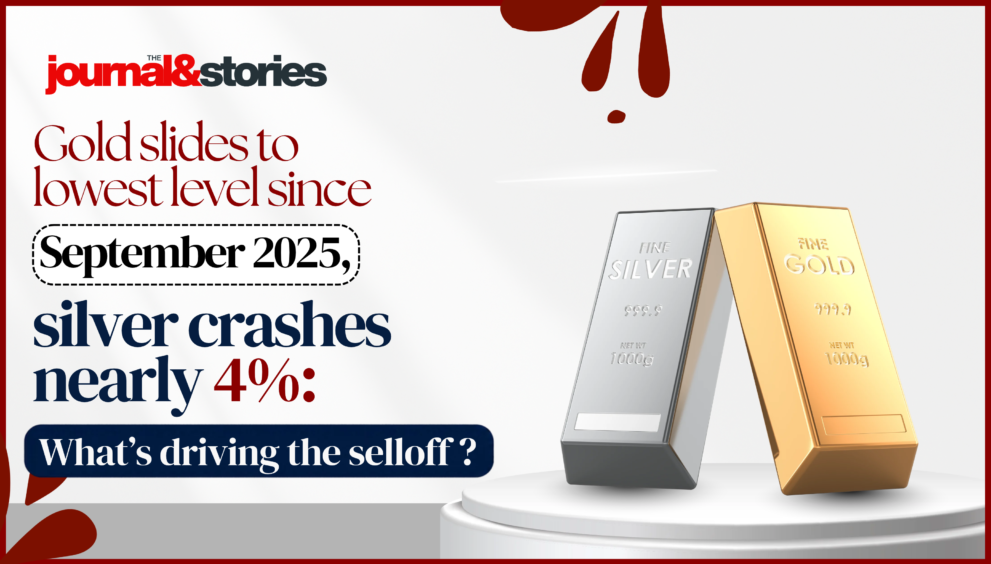

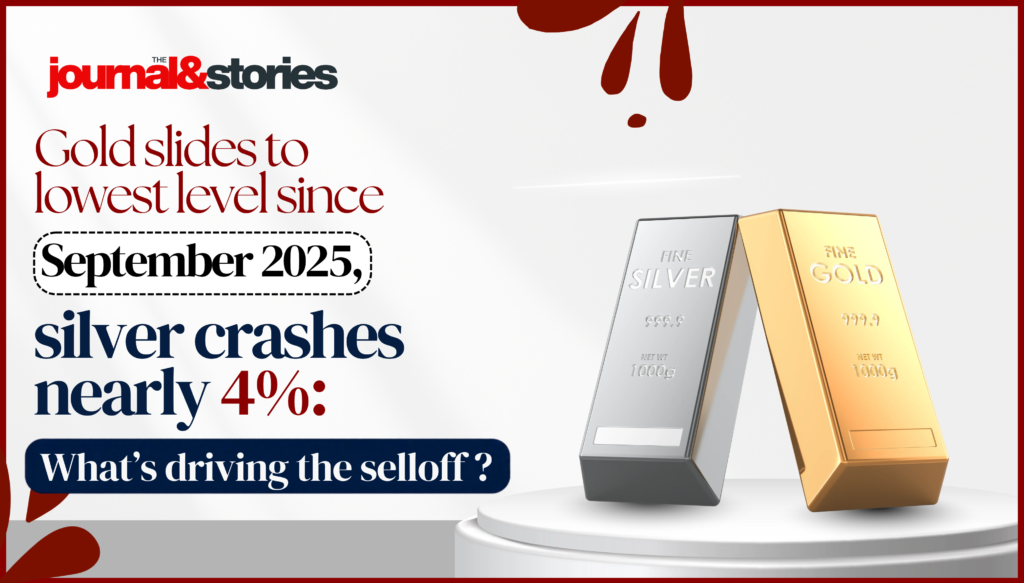
- Gold dropped 2.38% to $3,537.90 per ounce, touching its lowest level since September 2025.
- Silver plunged nearly 4% to $41.12 per ounce amid concerns about industrial demand.
- Expectations of a Federal Reserve interest rate increase have weakened demand for non-yielding precious metals.
- A technology-led stock market selloff triggered broader investor liquidation across financial markets.
- MCX gold declined 11%, and silver dropped 16.2% during the week, reflecting significant weakness in Indian bullion markets.
The Gold and Silver Price Crash has intensified as gold reached its lowest level since September 2025 and silver declined nearly 4% during Friday’s international trading session. The selloff has been driven by expectations of higher US interest rates, technology stock market losses, changing investor sentiment, and concerns about industrial demand. Silver has experienced additional pressure because of its dependence on manufacturing and industrial consumption. In India, MCX gold and silver also recorded substantial weekly losses. Investors are now monitoring US economic indicators and Federal Reserve policy signals to understand the future direction of precious metals.
Gold and Silver Price Crash: Gold Slides to Lowest Level Since September 2025, Silver Crashes Nearly 4% – What’s Driving the Selloff?
The Gold and Silver Price Crash has intensified in international markets, with gold falling to its lowest level since September 2025 and silver losing nearly 4% in a single trading session. The sharp decline on Friday, November 20, has raised concerns among investors as precious metals struggle to maintain their traditional safe-haven appeal amid growing financial market uncertainty.
Spot gold declined 2.38% to $3,537.90 per ounce by 5 p.m. ET on Friday, after touching an intraday low of $3,502.93. Meanwhile, spot silver dropped 3.83% to $41.12 per ounce, after reaching a session low of $40.66.
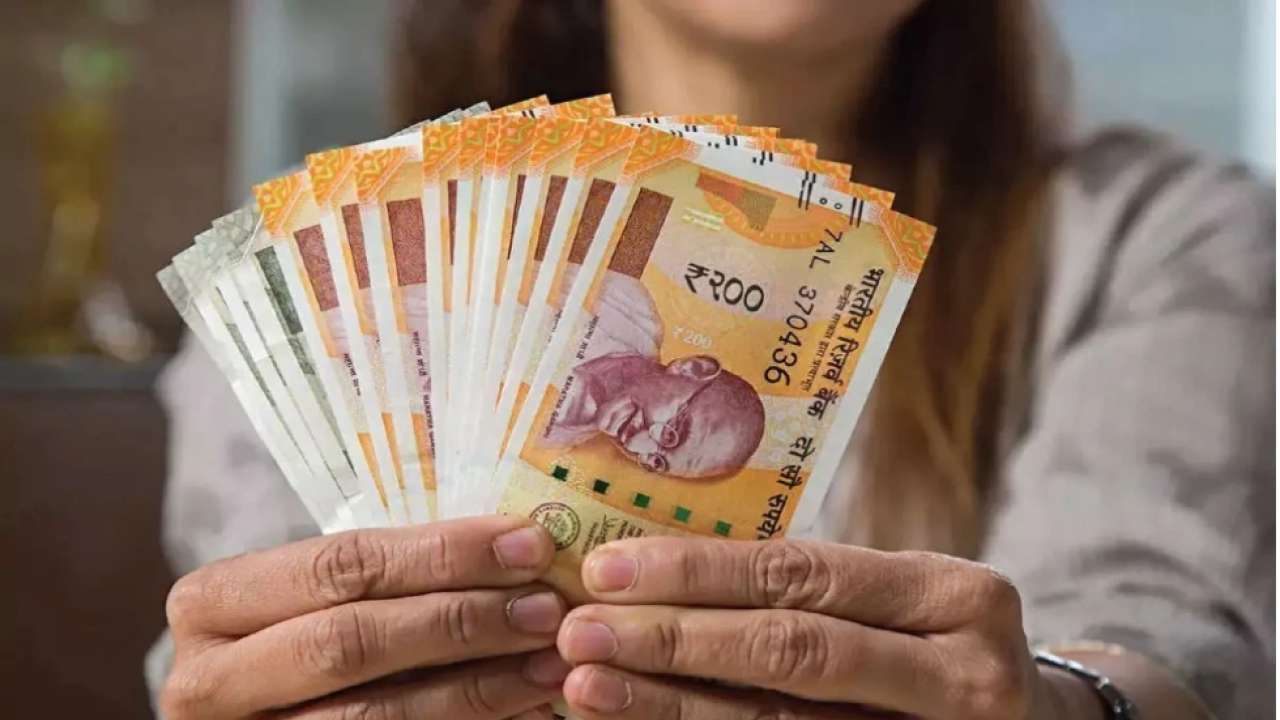
The weakness was not limited to international markets. In India, December gold futures on the Multi Commodity Exchange (MCX) declined 11% over the week to Rs 1,21,778 per 10 grams. Silver futures recorded an even sharper weekly fall of 16.2%, settling at Rs 1,47,758 per kilogram.
The latest Gold and Silver Price Crash reflects a combination of changing US Federal Reserve interest rate expectations, a technology-led stock market selloff, concerns about industrial demand, and investor liquidation. Here are the major factors behind the precious metals market downturn.
Why Is the Gold and Silver Price Crash Happening?
The biggest reason behind the recent decline is the changing outlook for global monetary policy, particularly in the United States.
Investors are increasingly concerned that the Federal Reserve may maintain tighter monetary conditions or increase interest rates to control persistent inflation. Expectations of higher borrowing costs have reduced the attractiveness of precious metals, which do not generate interest income.
When government bonds offer higher inflation-adjusted returns, investors may prefer interest-bearing financial instruments over gold and silver.
The Federal Reserve’s hawkish comments and expectations of a possible December rate increase have therefore created additional pressure on bullion prices.
Federal Reserve Rate Hike Expectations Put Pressure on Gold
The US Federal Reserve’s monetary policy outlook remains one of the most important factors influencing the Gold and Silver Price Crash.
Recent comments from policymakers have indicated concerns about persistent inflation and the possibility that interest rates may need to remain higher for longer.
Markets have increasingly priced in the possibility of a 25-basis-point rate increase in December.
Higher interest rates generally negatively affect gold because investors holding bullion do not receive regular interest payments. As bond yields increase, the opportunity cost of holding gold also rises.
This relationship has become particularly important as investors reassess their portfolios and look for assets offering better returns.
If the Federal Reserve continues signalling a restrictive monetary policy, precious metals could remain under pressure in the near term.
Technology Stock Market Selloff Triggers Investor Liquidation
Another major factor contributing to the Gold and Silver Price Crash is the sharp decline in technology stocks. Growing concerns about artificial intelligence valuations, rising technology investments, and uncertainty surrounding future profitability have affected investor confidence.
The Nasdaq Composite dropped 5.28% on Friday, while the S&P 500 declined 3.70%. The Dow Jones Industrial Average also recorded a significant loss.
The weakness in equities triggered broader selling across financial markets, including commodities and precious metals.
During periods of market stress, investors sometimes sell profitable assets to raise cash, meet financial obligations or reduce exposure to volatile investments.
Gold was also affected by this trend, despite its reputation as a defensive investment.
This suggests that the latest decline is not simply a result of weaker demand for gold but also reflects wider financial market liquidation.
Strong US Dollar and Rising Real Yields Weigh on Precious Metals
Currency movements and bond market expectations are also influencing the Gold and Silver Price Crash. Gold and silver are internationally traded in US dollars. When the dollar strengthens, precious metals become more expensive for buyers using other currencies. This can reduce international demand and put downward pressure on prices.
At the same time, rising real interest rates make non-yielding assets such as gold less attractive compared with government bonds and other interest-bearing investments.
Recent market developments have highlighted the importance of real yields in determining gold’s direction.
Although Treasury yields and the dollar experienced some short-term movements during Friday’s trading session, broader expectations surrounding monetary tightening continued to influence investor sentiment.
Silver Prices Fall Sharply Amid Industrial Demand Concerns
Silver has experienced a larger decline than gold, highlighting its additional exposure to industrial demand. Unlike gold, silver is widely used in manufacturing, electronics, solar panels, electrical equipment and automotive components.
This means its price depends on both investment demand and expectations about global industrial production. Concerns about slowing economic growth and uncertainty surrounding technology-sector spending have affected expectations for future silver consumption.
The technology stock selloff has further weakened market sentiment towards industrial commodities. Silver’s relatively higher price volatility has also contributed to its sharper decline. This explains why the metal lost nearly 4% in Friday’s session, compared with gold’s 2.38% decline.
The Gold and Silver Price Crash therefore reflects different pressures on the two metals, even though both are experiencing selling pressure simultaneously.
Geopolitical Uncertainty Fails to Support Gold Prices
Gold is traditionally considered a safe-haven asset during geopolitical conflicts, economic uncertainty, and financial market instability.
However, the recent market decline demonstrates that geopolitical tensions do not always result in higher gold prices. Ongoing tensions involving the United States and Iran, concerns surrounding shipping routes and instability in the Middle East have continued to influence global markets.
Despite these developments, investors have focused more heavily on interest rate expectations, liquidity requirements and financial market losses.
This has reduced the immediate impact of geopolitical uncertainty on gold demand.
The situation highlights how several economic and financial factors can outweigh traditional safe-haven demand during periods of widespread market liquidation.
What Does the Gold and Silver Price Crash Mean for Indian Markets?
The latest international selloff has also affected domestic bullion prices.
According to recent market data, MCX December gold futures declined by Rs 14,927, or approximately 11%, during the week, settling at Rs 1,21,778 per 10 grams.
December silver futures recorded a weekly decline of Rs 28,496, or 16.2%, to Rs 1,47,758 per kilogram. These declines indicate that Indian precious metals markets are also experiencing significant volatility.
Domestic gold and silver prices are influenced by international bullion rates, the rupee-dollar exchange rate, import duties and local market conditions.
Consequently, international price movements do not always translate into identical percentage changes in Indian retail prices.
The Gold and Silver Price Crash is particularly important for jewellery buyers, bullion market participants and investors monitoring domestic commodity trends.
Gold and Silver Price Crash: What Should Investors Watch Next?
The immediate outlook for gold and silver will depend on upcoming US economic data, Federal Reserve policy signals and developments in global financial markets.
Investors are expected to closely monitor purchasing managers’ index (PMI) readings, GDP figures, housing market data and durable goods orders.
Inflation-related indicators will be particularly important because they could influence expectations about future interest rate decisions.
For gold, the $3,500-per-ounce level is an important psychological area to watch. A sustained recovery in buying interest could help prices stabilise, while continued selling pressure may create further downside risks.
Silver is also approaching the important $40-per-ounce level, making industrial demand expectations and broader market sentiment particularly relevant.
The latest Gold and Silver Price Crash does not automatically mean that the long-term outlook for precious metals has changed permanently. However, continued uncertainty surrounding monetary policy, economic growth and investor positioning could keep both metals volatile.
Conclusion: Will Gold and Silver Prices Recover?
The recent decline in precious metals reflects a combination of Federal Reserve rate hike expectations, technology stock market weakness, changing investor sentiment and concerns about global industrial demand.
Gold has faced pressure despite its traditional safe-haven status, while silver has experienced additional weakness because of its industrial applications and higher market volatility.
The direction of the market will largely depend on upcoming economic indicators, US monetary policy decisions and developments in global financial markets.
For now, the Gold and Silver Price Crash highlights how quickly investor sentiment can change when interest rate expectations and liquidity concerns become the dominant market forces. Investors and market participants will be watching closely for signs of stabilisation or further selling pressure in the coming sessions.

