





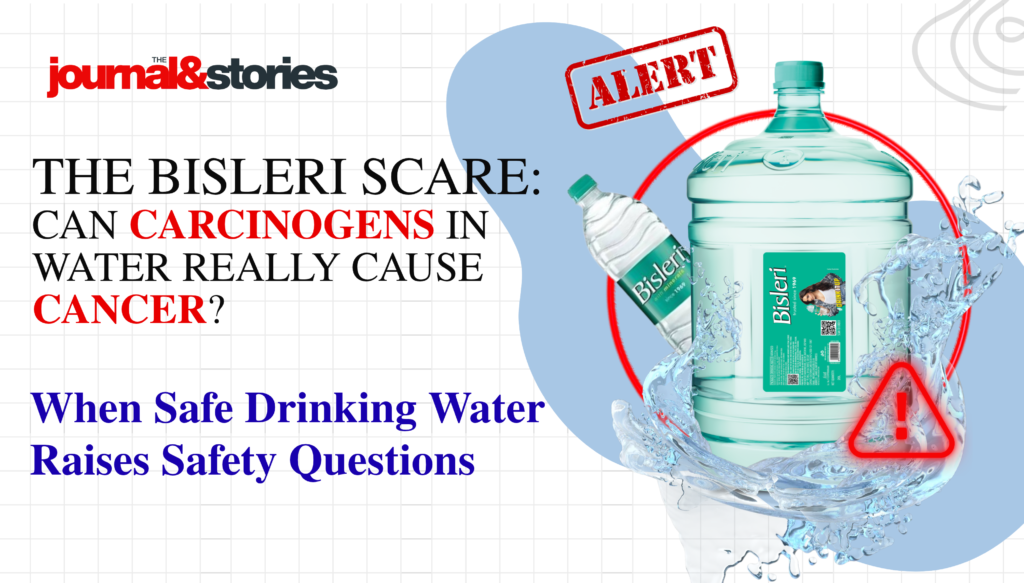

































































































































































































































































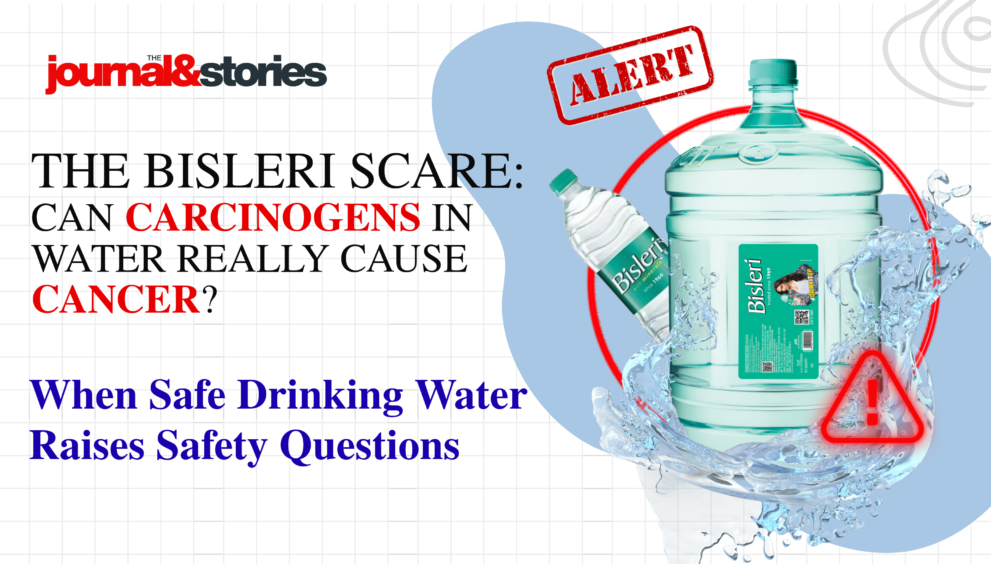
The Bisleri Scare: Can Carcinogens in Water Really Cause Cancer?

- FSSAI sanctioned prosecution against Bisleri International after a packaged drinking water sample was declared unsafe.
- Laboratory findings raised concerns about bromate and polynuclear aromatic hydrocarbons (PAHs).
- The initial sample reportedly contained 12 µg/L of bromate, exceeding the prescribed limit of 10 µg/L.
- Certain PAHs and bromate are associated with potential cancer risks, particularly under prolonged exposure.
- Bisleri disputed aspects of the findings and maintained that its packaged drinking water is safe.
- The controversy has renewed concerns about packaged drinking water quality and food-safety monitoring in India.
- The findings relate to a specific sample and do not establish that all Bisleri bottles are unsafe.
The Bisleri water controversy has raised concerns about the presence of potentially harmful chemicals in packaged drinking water. FSSAI sanctioned prosecution against Bisleri International after laboratory testing reportedly identified bromate and polynuclear aromatic hydrocarbons (PAHs) in a sample declared unsafe. While prolonged exposure to certain carcinogenic substances can increase cancer risk, a single exposure does not mean someone will develop cancer. Bisleri has disputed aspects of the findings and maintained that its products are safe. The incident highlights the importance of independent laboratory testing, strict quality control and transparent food-safety regulations in India’s bottled water industry.
Bisleri Water Controversy: FSSAI Findings, Cancer Risks and What Consumers Should Know
For millions of Indians, bottled drinking water has long been associated with convenience, hygiene and safety. Whether travelling, dining out or purchasing water for everyday consumption, consumers often rely on established brands such as Bisleri. However, a recent regulatory action against Bisleri International has raised serious questions about the safety of packaged drinking water in India.
The Food Safety and Standards Authority of India (FSSAI) has sanctioned prosecution against Bisleri International Pvt. Ltd. after a regulatory sample of its packaged drinking water was declared unsafe in laboratory examinations. The findings involved two chemical contaminants: bromate and polynuclear aromatic hydrocarbons (PAHs), a group that includes several substances associated with cancer.
The development has sparked widespread concern among consumers, particularly about whether drinking contaminated water can increase cancer risk. But does the presence of these chemicals mean that drinking a bottle of Bisleri can cause cancer? How dangerous are these substances, and what does scientific research actually say?
What Happened in the Bisleri Water Controversy?
The controversy emerged after FSSAI announced regulatory action against Bisleri International following laboratory findings involving a sample of its packaged drinking water.
According to the regulator, a sample collected from the company’s premises was initially found non-compliant with prescribed bromate limits and declared unsafe under the Food Safety and Standards Act, 2006.
Following an appeal by the company, the sample was referred to a referral food laboratory for further examination. The second laboratory also declared the sample unsafe after detecting polynuclear aromatic hydrocarbons (PAHs).
Based on these laboratory findings, FSSAI sanctioned prosecution against the company under the Food Safety and Standards Act.
The case relates to a sample collected at Bisleri’s Goa manufacturing facility on September 30, 2025.
What Did Bisleri Say?
Bisleri disputed aspects of the regulatory findings and maintained that its packaged drinking water remains safe for consumption.
According to the company’s statement, six samples were collected from its Goa facility in September 2025. Five reportedly met the applicable standards, while one recorded bromate at 12 micrograms per litre, against the prescribed limit of 10 micrograms per litre.
Bisleri subsequently challenged the initial findings. The company stated that independent laboratory testing found bromate within the prescribed limit.
It also raised concerns about differences between the laboratory results, particularly regarding the detection of PAHs.
The company further stated that it had submitted independent test results to FSSAI’s Western Regional Office in February 2026 and had not received further communication regarding the matter.
Bisleri also highlighted its manufacturing quality-control procedures, claiming that it conducts more than 90 quality checks across its 10-step manufacturing process.
Importantly, the regulatory action is a prosecution sanction, not a final judicial conviction. The company has disputed aspects of the findings, and the legal process must be distinguished from the scientific assessment of the sample.
What Are Carcinogens, and How Can They Enter Drinking Water?
Carcinogens are substances or agents that can cause or contribute to the development of cancer.
They can enter drinking water through several routes, including industrial pollution, agricultural activities, contaminated groundwater, natural geological sources and certain water-treatment processes.
Some contaminants are naturally occurring, while others are introduced through human activities.
The presence of a carcinogenic substance does not automatically mean that drinking water will cause cancer. The actual risk depends on several factors:
- The type of chemical present.
- Its concentration in the water.
- The duration of exposure.
- The amount of contaminated water consumed.
- Individual health and other environmental exposures.
According to the World Health Organization (WHO), long-term exposure to certain drinking-water contaminants, including inorganic arsenic, can significantly increase the risk of cancer.
The Bisleri controversy has brought particular attention to two chemical groups: bromate and PAHs.
1. Bromate: Why Is This Chemical Raising Concerns?
Bromate is an inorganic chemical that can form during certain water-disinfection processes, particularly ozonation.
Ozone is used in water treatment to destroy harmful microorganisms. However, when ozone reacts with naturally occurring bromide ions in the source water, bromate can form as an unwanted by-product.
This creates a challenge for water manufacturers: ensuring effective disinfection while controlling the formation of potentially harmful chemical by-products.
Can Bromate Cause Cancer?
Scientific research has identified bromate as a potential carcinogenic concern.
The International Agency for Research on Cancer (IARC) classifies bromate in Group 2B, meaning it is possibly carcinogenic to humans.
This classification is based on sufficient evidence from experimental animal studies, while evidence of carcinogenicity in humans remains inadequate.
Animal research has associated prolonged bromate exposure with tumours affecting organs and tissues, including the kidneys and thyroid.
The WHO has established a provisional guideline value of 10 micrograms per litre (µg/L) for bromate in drinking water.
In the Bisleri case, the initial laboratory result reportedly recorded 12 µg/L, representing a 20% exceedance of the prescribed limit.
However, this figure should be understood in context. It is a laboratory finding involving a particular sample, not proof that every bottle of the brand contains excessive bromate.
2. Polycyclic Aromatic Hydrocarbons (PAHs): Another Chemical Concern
The second major concern in the Bisleri case involves polynuclear aromatic hydrocarbons, commonly known as polycyclic aromatic hydrocarbons or PAHs.
PAHs are a large group of organic chemicals formed primarily through the incomplete combustion of materials containing carbon.
They can originate from:
- Vehicle exhaust and industrial emissions.
- Burning coal, wood and petroleum products.
- Tobacco smoke.
- Industrial waste and environmental pollution.
- Contaminated soil and water sources.
Certain PAHs can enter water through environmental contamination and industrial activities.
Are PAHs Carcinogenic?
Some PAHs are recognised carcinogens, although not every chemical belonging to this group has the same toxicity or cancer risk.
For example, benzo[a]pyrene is a well-established carcinogenic PAH.
Certain PAHs can undergo metabolic changes inside the human body, producing reactive substances capable of interacting with DNA. If DNA damage is not properly repaired, it can contribute to mutations and potentially increase cancer risk.
However, an important detail remains unclear in the Bisleri case: the specific PAH compounds detected and their concentrations have not been publicly disclosed in the reports examined.
Without this information, it is not possible to calculate the actual health risk associated with the reported PAH finding.
Can Drinking Contaminated Water Really Cause Cancer?
Yes. Scientific evidence establishes that prolonged exposure to certain chemical contaminants in drinking water can increase cancer risk.
However, it is important to distinguish between the ability of a substance to cause cancer and the actual risk associated with a particular exposure.
Cancer development is a complex process influenced by several factors, including exposure levels, duration, genetics, lifestyle and environmental conditions.
For example, the WHO identifies inorganic arsenic as a major drinking-water contaminant. Long-term exposure to inorganic arsenic through drinking water and food can cause skin, bladder and lung cancer.
Similarly, research has examined associations between certain disinfection by-products and cancers, particularly bladder cancer.
The important distinction is that these risks generally concern repeated or prolonged exposure rather than a single isolated incident.
Drinking one bottle of water containing a trace amount of a potentially carcinogenic substance does not mean that a person will develop cancer. The risk must be assessed using the actual chemical concentration, exposure duration and available toxicological evidence.
This is why drinking-water safety standards are designed to control contaminants and minimise long-term exposure.
Other Water Contaminants That Can Increase Cancer Risk
The Bisleri controversy is not the only reason to examine chemical safety in drinking water. Several other contaminants have been studied extensively for their potential health effects.
1. Arsenic
Inorganic arsenic is a naturally occurring contaminant that can enter groundwater through geological processes and industrial activities.
According to WHO, prolonged exposure through drinking water and food can increase the risk of skin, lung and bladder cancer.
The WHO guideline value for arsenic in drinking water is 10 µg/L.
2. Nitrates
Nitrates can enter water supplies through agricultural fertilisers, animal waste and sewage contamination.
Under certain conditions, nitrate exposure can contribute to the formation of N-nitroso compounds, some of which are carcinogenic.
Research continues to investigate the relationship between long-term nitrate exposure and different cancers.
3. Disinfection By-products
Disinfection is essential for controlling harmful microorganisms in drinking water. However, chlorine and other disinfectants can react with naturally occurring organic matter to produce chemical by-products.
Some trihalomethanes and other disinfection by-products have been investigated for possible links with bladder and colorectal cancer.
The objective is not to avoid water disinfection but to maintain effective microbial protection while controlling chemical by-products.
4. PFAS (Forever Chemicals)
Per- and polyfluoroalkyl substances, commonly known as PFAS, are synthetic chemicals used in various industrial and consumer applications.
They are often called chemicals forever because many of them persist in the environment for long periods.
Certain PFAS have been associated with adverse health effects. IARC classifies PFOA as carcinogenic to humans and PFOS as possibly carcinogenic to humans.
Their potential presence in drinking-water supplies has become an important environmental and public-health concern.
Is Bottled Drinking Water Always Safer Than Tap Water?
Not necessarily.
Packaged drinking water is subject to food-safety requirements, manufacturing controls and laboratory testing. However, the quality of bottled water depends on the source, treatment process, storage conditions, packaging and quality-control procedures.
Similarly, municipal water supplies are treated and monitored, but their quality can vary depending on the source and local distribution infrastructure.
A bottle carrying a familiar brand name is not, by itself, a guarantee that every batch is free from contaminants.
Consumers should understand that water safety depends on proper testing and regulatory compliance rather than branding or appearance.
How Is Packaged Drinking Water Regulated in India?
India regulates packaged drinking water through the Food Safety and Standards Authority of India (FSSAI), which operates under the Ministry of Health and Family Welfare.
An important regulatory change took place in October 2024, when the government removed the mandatory BIS certification requirement for packaged drinking water and mineral water.
Subsequently, FSSAI strengthened its oversight by placing these products in the high-risk food category in November 2024.
A new mandatory Scheme of Testing for Packaged Drinking Water and Mineral Water became effective on January 1, 2026.
Under this framework, manufacturers must comply with prescribed testing requirements and maintain appropriate quality-control records.
The objective is to strengthen monitoring, improve accountability and ensure that packaged water available in the Indian market meets applicable safety standards.
The recent Bisleri case demonstrates why consistent laboratory testing and regulatory enforcement are important for consumer protection.
What Should Consumers Check Before Buying Packaged Drinking Water?
Although consumers cannot identify chemical contaminants simply by looking at a bottle, certain basic precautions can help them make informed purchasing decisions.
- Check the seal: Purchase bottles with an intact cap and tamper-evident seal.
- Verify the label: Check the manufacturer’s details, FSSAI licence information and product description.
- Check the batch number: Look for the manufacturing date, batch identification and best-before information.
- Avoid damaged packaging: Do not purchase bottles with damaged seals, leakage or visibly compromised packaging.
- Check storage conditions: Prefer bottles stored in clean, shaded areas rather than exposed to prolonged direct sunlight.
- Follow regulatory updates: Pay attention to official food-safety advisories and product-specific recalls.
These steps cannot guarantee the absence of chemical contaminants, but they can help consumers avoid certain packaging, handling and traceability problems.
What Does the Bisleri Controversy Mean for India’s Bottled Water Industry?
The controversy extends beyond one company because packaged drinking water is a widely consumed product in India.
Consumers depend on bottled water in places where access to reliable drinking-water infrastructure may be limited. This makes product quality, transparency and regulatory monitoring especially important.
The incident also raises several questions for the wider industry:
- Are manufacturers consistently monitoring chemical by-products during water treatment?
- Are laboratory testing procedures sufficiently transparent?
- Are manufacturers maintaining effective quality-control systems across all production facilities?
- Are regulatory authorities conducting adequate inspections and independent testing?
- Are consumers receiving timely information about products that fail safety standards?
According to Reuters’ November 22, 2026 report, Indian food-safety authorities were planning wider checks of Bisleri samples and other packaged drinking water brands following the findings.
This indicates that the issue has broader implications for the industry’s quality-control and monitoring practices.
Ultimately, consumer confidence depends on transparent testing, consistent manufacturing standards and effective enforcement.
Conclusion: Should Consumers Be Worried About Carcinogens in Water?
The Bisleri controversy highlights an important public-health issue: drinking water must be safe not only from harmful microorganisms but also from potentially dangerous chemical contaminants.
Scientific research confirms that certain substances, including bromate, some PAHs and inorganic arsenic, can pose carcinogenic risks under particular exposure conditions.
However, the findings involving Bisleri relate to a specific regulatory sample and should not be interpreted as proof that every bottle sold under the brand is contaminated.
The company has disputed aspects of the findings and maintains that its products are safe. The regulatory proceedings and the scientific assessment of the reported sample should therefore be considered separately.
For consumers, the bigger lesson is that clean-looking water is not necessarily chemically safe. Independent testing, transparent reporting and strict quality-control standards are essential for protecting public health.
Water safety should never depend on brand reputation alone. It must be established through scientific evidence, regulatory compliance and continuous monitoring.
Frequently Asked Questions (FAQs)
1. Can drinking water containing carcinogens cause cancer?
Yes. Long-term exposure to certain carcinogenic contaminants in drinking water can increase cancer risk. The actual risk depends on the chemical, its concentration, and the duration of exposure.
2. Which chemicals were detected in the Bisleri water sample?
According to FSSAI’s reported findings, the sample was initially flagged for bromate levels above the prescribed limit. A referral laboratory subsequently declared it unsafe after detecting polynuclear aromatic hydrocarbons (PAHs).
3. What is the permitted bromate limit in drinking water?
The WHO guideline value for bromate in drinking water is 10 micrograms per litre (µg/L). The initial Bisleri sample reportedly recorded 12 µg/L.
4. Does drinking one contaminated water bottle cause cancer?
No such conclusion can be drawn from a single exposure. Cancer risk depends on the substance, concentration, exposure duration and other factors. A single exposure does not mean someone will develop cancer.
5. Has Bisleri confirmed that its water is contaminated?
Bisleri has not accepted the broader implication that its products are unsafe. The company has maintained that its water is safe for consumption and disputed aspects of the laboratory findings. FSSAI, meanwhile, has sanctioned prosecution based on the regulatory sample results.
6. Are all Bisleri bottles unsafe?
The reported findings concern a particular regulatory sample associated with the company’s Goa facility. They do not establish that every Bisleri bottle or batch is contaminated.
7. What are PAHs in drinking water?
PAHs are organic chemicals formed mainly through incomplete combustion of carbon-containing materials. Some members of this chemical group are carcinogenic and can enter water through environmental and industrial contamination.
8. Is bottled water safer than tap water?
Not automatically. Both bottled and tap water require appropriate treatment, monitoring and testing. Safety depends on the quality of the source, treatment processes, storage and regulatory compliance.
9. Which authority regulates packaged drinking water in India?
The Food Safety and Standards Authority of India (FSSAI) regulates packaged drinking water and mineral water under India’s food-safety framework.
10. What should consumers do to ensure drinking-water safety?
Consumers should purchase properly labelled products from reliable sources, check packaging and batch details, follow official safety advisories, and ensure that their regular drinking-water source is appropriately tested.

